
floyo logo
Powered by
ThinkDiffusion
⚡️Nano Banana 2 ⚡️ just landed. Start creating now.
floyo logo
Powered by
ThinkDiffusion
⚡️Nano Banana 2 ⚡️ just landed. Start creating now.

Character Consistency

fl
floyoofficial
Overview

There are many possible paths to get from a character idea to consistent and controllable character renders because everyone has different ways of thinking and working, unique starting assets and output requirements.

So here's a curated selection of several ways to get from A to B, designed to be as flexible as the creative process.

STEP 1

Character design

Depending on what kind of ideas, sketches or images you're starting with, there are different workflows to turn those into final character images that you're happy with and ready to use for training.

Start with a written description, a sketch or an existing image for starters. Add in a face of someone if there's a particular person you have in mind.
Step 1
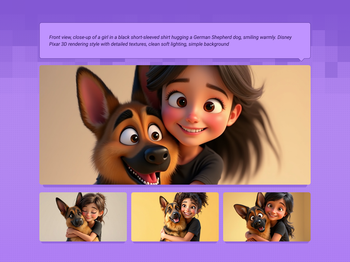
Text2Image + Prompt Enhancer LLM for Flux

INPUTS

Text Prompt

OUTPUTS

Image

Text2Image + Prompt Enhancer LLM for Flux

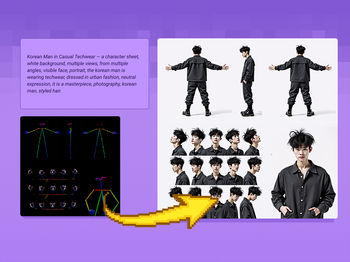
Flux Text to Character Sheet

INPUTS

Text Prompt

OUTPUTS

Character Sheet

Flux Text to Character Sheet

Flux Kontext - Sketch to Image

INPUTS

Text Prompt
Image

OUTPUTS

Image

Flux Kontext - Sketch to Image

Flux Kontext - Quick & Easy

INPUTS

Text Prompt
Image

OUTPUTS

Image

Flux Kontext - Quick & Easy

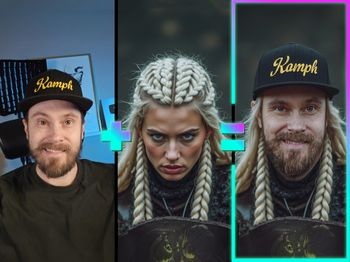
SMART FACE SWAPPER - Ace++ Flux Face swap

INPUTS

Text Prompt
Image

OUTPUTS

Image

SMART FACE SWAPPER - Ace++ Flux Face swap

Image to Character Spin

INPUTS

Text Prompt
Image

OUTPUTS

Video

Image to Character Spin

Image to Character Sheet with Kontext

INPUTS

Text
Image

OUTPUTS

Image

Image to Character Sheet with Kontext

STEP 2

Training Set Creation & LoRA Training

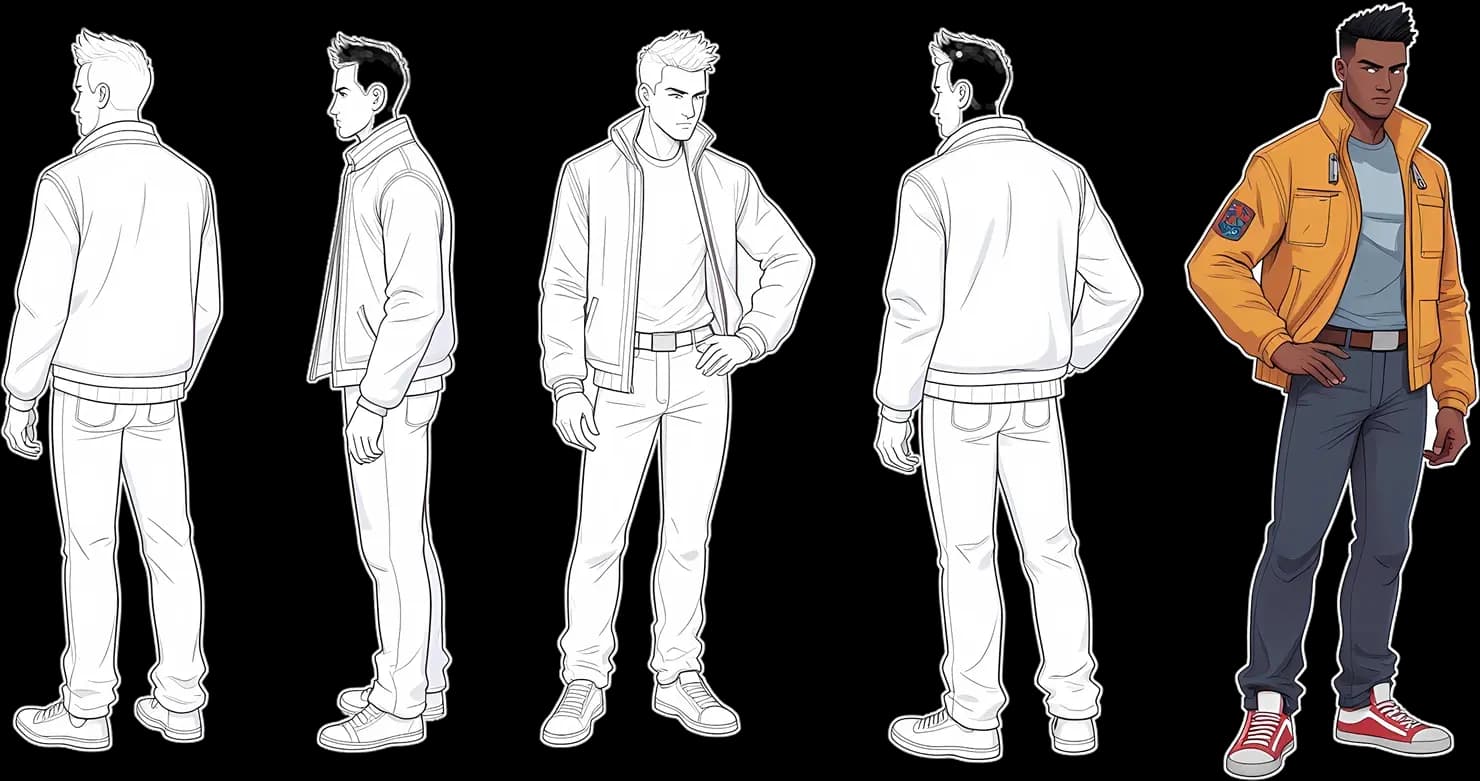
Once you have an image of a character that you like, it's time to create a variety of images that are based on that initial image. A character sheet is a good start although we recommend additional variations that have different environments and lighting, so that the LoRA doesn't associate the character with image properties and elements that will change on and around them.

In general, the more robust the variety of inputs, the more flexible and controllable the outputs will be while retaining the true essence of what the character is and isn't. Don't worry if there's minor inconsistencies in the input images, this is why we're creating a model in the first place!

Check out this step-by-step LoRA Training guide and downloadable workflows.
Step 1
Character Consistency - 1 image only. Flux Ace++

INPUTS

Image

OUTPUTS

Multiple Images

Character Consistency - 1 image only. Flux Ace++

Flux Kontext - Single Image to Character LoRA

INPUTS

Image

OUTPUTS

Multiple Images

Flux Kontext - Single Image to Character LoRA

Fast LoRA Training for Flux via Floyo API

INPUTS

Multiple Images

OUTPUTS

LoRA

Fast LoRA Training for Flux via Floyo API

ComfyUI Flux LoRA Trainer

INPUTS

Multiple Images

OUTPUTS

LoRA

ComfyUI Flux LoRA Trainer

STEP 3

Image Creation & Manipulation

Once your LoRA is created, there are many ways to generate consistent images from that model, and manipulate it to match your ideas and requirements.
Step 1
Text to Image + LoRA model

INPUTS

Text Prompt
LoRA

OUTPUTS

Image

Text to Image + LoRA model

Text to Image with Multi-LoRA

INPUTS

Text Prompt
Multiple LoRAs

OUTPUTS

Image

Text to Image with Multi-LoRA

Flux Inpaint - ULTIMATE workflow.

INPUTS

Image
Brushed Mask

OUTPUTS

Image

Flux Inpaint - ULTIMATE workflow.

Flux ControlNet 2.0 - All-in-one

INPUTS

Image
Brushed Mask

OUTPUTS

Image

Flux ControlNet 2.0 - All-in-one

Flux Kontext Inpainting

INPUTS

Image
Brushed Mask

OUTPUTS

Image

Flux Kontext Inpainting

Image to 3D with Hunyuan3D w/ Texture Upscale

INPUTS

Image
Text Prompt

OUTPUTS

3D Model
Texture map
Normal Map

Image to 3D with Hunyuan3D w/ Texture Upscale