Topaz Image Upscale Generative
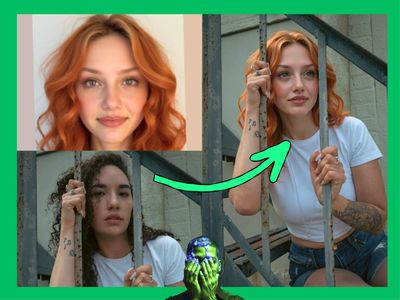
Upscale any image up to 4x with Topaz Wonder 3, a generative model that rebuilds missing detail instead of stretching pixels. Upload an image, pick a scale, and hit run.
Generative Upscale
Image
Topaz
Upscale
42




Nodes & Models
TopazImageUpscaleGenerative_floyo
LoadImage
PreviewImage
ABOUT THE WORKFLOW
Upscale an Image
Upload a photo and get a larger, sharper version back. The model does not stretch existing pixels. It generates new detail where the original had none, rebuilding texture, edges, and faces from what it can read in the source. That's it.
Partner node. This workflow calls an external API, so each run uses credits from your API wallet. No API key needed. Floyo handles the connection.
Model
Topaz Wonder 3 by Topaz Labs. A generative diffusion upscaler that invents missing detail rather than sharpening what is already there. Strong on compressed photos, blurry portraits, and complex textures like skin, fabric, and foliage.
HOW IT WORKS
Step 1. Upload your image
The photo you want to enlarge. Any standard format works.
Works great with: photos · portraits · screenshots · scanned prints
Step 2. Pick your upscale factor
Choose how much bigger the output should be. 2x doubles both width and height. Go higher for larger prints or crops.
Step 3. Hit run and preview
Wonder 3 rebuilds the image at your chosen scale with generated detail. Right-click the preview to save it.
Ready for: Photoshop · Lightroom · Figma · print
First time? Leave every setting as-is. The defaults (Wonder 3 · 2x · JPEG) are the right starting point for almost everyone.
RECOMMENDED SETTINGS
Quick-start guide. Find the goal that matches yours and copy the settings.
Standard upscale (most people) — Wonder 3 · 2x · JPEG · subject detection: All. The right starting point for almost everyone.
Restoring an old or heavily compressed photo — Wonder 3 · 2x or 4x · subject detection: All. Wonder 3 was built for degraded sources. It fills in detail that compression destroyed.
Upscaling a portrait or headshot — Wonder 3 · 2x · face enhancement: on · strength: 0.8 · creativity: 0. Turn face enhancement on whenever there are people in the shot.
Need maximum enlargement for print — Wonder 3 · 4x · JPEG or PNG. Higher factor means more generated pixels. Expect longer generation time and higher credit cost.
Source image is already high resolution — Switch to Wonder 3.5 if available, or keep the factor at 2x. Generative models add the most value to low-res sources. A clean high-res file benefits less.
Result looks too smooth or artificial — Lower the upscale factor. At high scales on already-decent sources, the model can over-generate. Try 2x instead of 4x.
Prompt: This workflow has no text prompt. The model reads the image and decides what detail to generate. Control the output through the upscale factor, subject detection mode, and face enhancement settings instead.
LEARN
📹 Videos
ComfyUI 101 Free Course ft. Sebastian Kamph
Floyo 101 for Team Collaboration
✨ Quick links
USE CASES
📸 Photographers
Rescue old, compressed, or cropped photos by rebuilding the detail that was lost. Print at sizes the original resolution could never support.
🎨 Designers & Art Directors
Upscale low-res client assets, stock images, or reference photos to production resolution without visible softness.
🖼️ Archivists & Restorers
Enlarge scanned prints, historical photos, and degraded digital files while recovering faces, text, and fine texture.
🎮 Game & VFX Artists
Scale up texture references, concept art, or screenshots for use in pipelines that need higher source resolution.
WHAT WORKS BEST / WHAT TO AVOID
✅ Works great
Compressed JPEGs and web-scraped images
Old scanned photos and prints
Portraits and group shots (with face enhancement on)
Landscapes with complex natural texture
⚠️ May produce softer results
Already high-resolution RAW or TIFF files
Heavy noise or extreme low-light shots
Images with precise text that must stay exact
Very high upscale factors (4x) on already-decent sources
FAQ
What is Topaz Wonder 3 and how does it upscale images?
Topaz Wonder 3 is a generative diffusion model made by Topaz Labs. Unlike traditional upscalers that interpolate between existing pixels, Wonder 3 generates new detail that was not in the original image. It reads the lighting, texture, and structure of the source and fills in what is missing. This makes it effective on compressed, blurry, and low-resolution photos where there is no real detail left to sharpen.
Is Topaz Wonder 3 better than standard upscaling in Photoshop or Lightroom?
For low-resolution and degraded images, yes. Standard resampling in Photoshop or Lightroom redistributes existing pixel data, which means a blurry 200px face stays blurry at 800px. Wonder 3 generates plausible new detail for that face, including skin texture, hair strands, and eye definition. On clean, high-resolution files the difference is smaller because there is less missing information for the model to reconstruct.
Does Topaz Wonder 3 change my image or add things that were not there?
Yes, by design. Generative upscaling invents texture and detail the source no longer contains. The output looks more natural than a bicubic resize, but it is not forensically accurate. If you need pixel-exact preservation, use a precision upscaler instead. For most creative and production work, the generated detail is indistinguishable from a real higher-resolution capture.
What is subject detection and when should I change it?
Subject detection tells the model what to focus its enhancement on. "All" treats the entire image equally. "People" prioritizes faces and bodies. "None" applies a uniform pass with no subject weighting. For portraits and group shots, "People" or "All" with face enhancement turned on gives the best facial detail. For landscapes or product shots with no people, "All" or "None" both work well.
What is the difference between Wonder 3 and Wonder 3.5?
Wonder 3 is optimized for degraded and compressed images. Wonder 3.5 builds on it with finer detail generation, fewer repetitive patterns, and better handling of structured content like tables and charts. Start with Wonder 3 for heavily damaged sources. Try Wonder 3.5 when the source is already decent and you want finer texture without over-generation.
Can I use the upscaled images commercially?
Topaz Wonder 3 is a commercial API from Topaz Labs. The upscaled outputs are yours to use in commercial projects, client work, and production pipelines. Make sure you hold the rights to the source image you upload.
How to run Topaz generative upscaling online?
You can run Topaz generative upscaling online through Floyo. No installation, no setup, no API key to wire up. Open the workflow in your browser, upload your image, and hit run. Free to try.
WHY FLOYO?
Floyo is the only platform with team collaboration for ComfyUI in the browser. You run workflows with no install. You share run history, assets, and models across your team. You pay only when you generate. Floyo supports open-source and closed-source models.
A designer runs an edit and likes the result. A teammate opens that exact run from shared history and keeps going. No file handoffs. No version confusion.
For studios and enterprise teams, Floyo adds private workspaces, pooled resources, and a team usage dashboard. Other ComfyUI cloud tools run for one person at a time. Floyo runs for the whole team, with transparent per-generation costs.
Ready to try it?
Upload a photo and upscale it. The settings are already set.
Questions? Watch the free course or check the FAQ above.
Read more