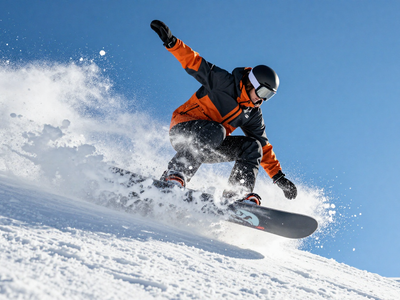
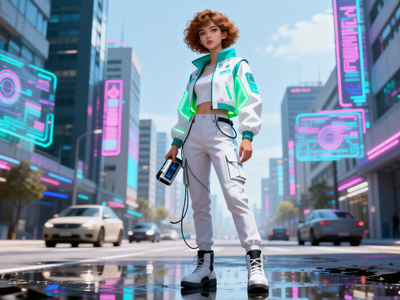
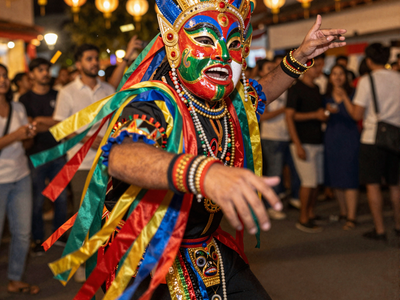
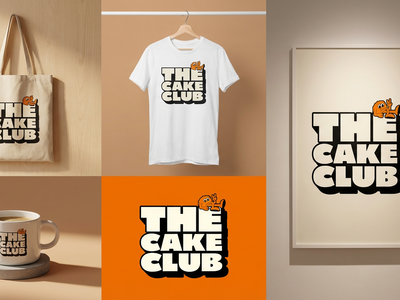
FLUX.3 Image Klein for Text to Image
Generate images from a text prompt using FLUX.3 Image Klein, Black Forest Labs’ open-weights 5.6B image model. Write a prompt, pick an aspect ratio, and hit run.
FLUX.3 Image Klein
Image
Text to Image
88






Nodes & Models
ResolutionSelector
PrimitiveStringMultiline
CLIPLoader
qwen3.5_9b_flux3_prompt_upsampler_w4a8.safetensors
qwen3vl_4b_int8_convrot.safetensors
UNETLoader
flux3-image-klein-base-int8-convrot.safetensors
VAELoader
flux2-vae.safetensors
MarkdownNote
EmptyFlux2LatentImage
TextGenerate
CLIPTextEncode
ComfySwitchNode
PreviewAny
KSampler
VAEDecode
SaveImage
ABOUT THE WORKFLOW
Generate an image from text
Write a prompt describing the image you want. The model generates it. Turn on the built-in prompt enhancer for better results from short descriptions, or write a detailed prompt yourself. Pick an aspect ratio, hit run, and download the result.
Model
FLUX.3 Image Klein by Black Forest Labs. A 5.6B parameter open-weights model strong at text rendering in images, prompt following, and efficient single-GPU generation. Released October 2026.
HOW IT WORKS
Step 1. Write your prompt
Describe the image you want. Detailed prompts work best with this model. Short prompts can produce generic results unless you turn on the prompt enhancer.
Works great with: photos · illustrations · scenes with text · product shots
Step 2. Turn on the prompt enhancer (optional)
A toggle that expands short prompts into detailed scene descriptions using a built-in language model. Off by default. Turn it on when your prompt is a few words or a single sentence.
Step 3. Pick an aspect ratio and resolution
Choose from square, landscape, or portrait ratios. Resolution defaults to 1 megapixel (1024x1024 for square). Raise it to 2 megapixels for sharper output.
Step 4. Hit run and download
The model generates your image in seconds. Preview it in the workflow, then download the PNG.
Ready for: Photoshop · Figma · Canva · any editor
First time? Leave every setting as-is. The defaults are the right starting point for almost everyone.
RECOMMENDED SETTINGS
KSampler:
Steps: min 20, max 100 (recommended 50)
CFG: min 2.5, max 5.0 (recommended 3.5)
Denoise: min 0.0, max 1.0 (use 1.0 for t2i)
Sampler: er_sde or euler
Scheduler: simple or normal
Resolution:
Width/Height: min 512, max 4096 (must be multiple of 16)
Megapixels: min 0.5, max 4.0 (recommended 1.0; above 2.0 risks OOM on 8GB)
Batch size: min 1, max 8 (keep at 1 on 8GB VRAM)
Prompt Upsampler (TextGenerate):
max_length: min 64, max 8192 (recommended 3584)
temperature: min 0.0, max 2.0 (recommended 1.0)
top_k: min 1, max 100
top_p: min 0.0, max 1.0
presence_penalty: min 0.0, max 2.0
repetition_penalty: min 1.0, max 2.0
LEARN
📹 Videos
ComfyUI 101 Free Course ft. Sebastian Kamph
Floyo 101 for Team Collaboration
✨ Quick links
USE CASES
📸 Stock-free photography
Generate photorealistic images for blog posts, presentations, and social media without a photo shoot or a stock subscription.
🎨 Concept art and mood boards
Describe a scene, a character, or an environment and get a visual starting point in seconds. Iterate by tweaking the prompt or locking the seed.
🛍️ Product and marketing visuals
Generate hero images, ad backgrounds, and campaign visuals from a text brief. Strong text rendering makes it a good fit for images that include headlines or labels.
🔤 Images with readable text
Create posters, signs, social cards, and thumbnails where the text in the image needs to be legible. FLUX.3 Klein renders text more accurately than most open-source models.
WHAT WORKS BEST / WHAT TO AVOID
✅ Works great
Detailed, specific prompts with lighting and composition cues
Photorealistic scenes and portraits
Images with rendered text (signs, labels, posters)
Prompt enhancer turned on for short or vague prompts
⚠️ May produce softer results
Very short prompts with the enhancer off
Highly complex multi-subject scenes with specific spatial layouts
Abstract or conceptual requests without concrete visual anchors
Extremely high resolution (4K) with low step counts
FAQ
What is FLUX.3 Image Klein?
FLUX.3 Image Klein is a 5.6 billion parameter open-weights image generation model from Black Forest Labs, released on October 15, 2026. It handles text-to-image generation, image editing, and multi-reference composition (up to 10 images) in a single model. This workflow runs it in text-to-image mode: you write a prompt, and the model generates an image.
How is FLUX.3 Klein different from FLUX.2 Klein?
FLUX.3 Klein is the next generation. It scores higher on prompt fidelity and image quality benchmarks, renders text in images more accurately, and generates faster. It also introduces a built-in prompt upsampler that expands short prompts into detailed captions the model responds to well. FLUX.2 Klein came in 4B and 9B parameter variants; FLUX.3 Klein is a single 5.6B model that covers generation and editing.
What does the prompt enhancer do?
The prompt enhancer is a built-in language model (Qwen 3.5 9B) that takes your short prompt and expands it into a detailed scene description. FLUX.3 Klein produces its best results from long, specific prompts. The enhancer bridges the gap when you have a quick idea but not a full description. It is off by default. Turn it on for short prompts; leave it off when you have already written a detailed one.
Can FLUX.3 Klein render text inside images?
Yes. Accurate text rendering is one of its strengths. Spell out the exact wording you want inside double quotes in your prompt, and the model will place legible text in the image. This makes it a good fit for posters, signs, social cards, memes, and any image where text needs to be readable.
Is FLUX.3 Image Klein free for commercial use?
FLUX.3 Image Klein is released under the FLUX Kommunity License, which allows free commercial use for organizations with annual revenue under $5 million. Above that threshold, a separate commercial license from Black Forest Labs is required. Review the current license terms on the Black Forest Labs website before using outputs in commercial projects.
What resolution should I use?
Start at 1 megapixel (the default). This produces a 1024x1024 image at square aspect ratio. For sharper detail, raise it to 2 megapixels. The model supports output up to native 4K, but higher resolutions take longer and may need more steps for clean results. For most uses, 1 to 2 megapixels is the right range.
How to run FLUX.3 Image Klein online?
You can run FLUX.3 Image Klein online through Floyo. No installation, no setup, no API key to wire up. Open the workflow in your browser, write your prompt, and hit run. Free to try.
WHY FLOYO?
Floyo is the only platform with team collaboration for ComfyUI in the browser. You run workflows with no install. You share run history, assets, and models across your team. You pay only when you generate. Floyo supports open-source and closed-source models.
A designer runs an edit and likes the result. A teammate opens that exact run from shared history and keeps going. No file handoffs. No version confusion.
For studios and enterprise teams, Floyo adds private workspaces, pooled resources, and a team usage dashboard. Other ComfyUI cloud tools run for one person at a time. Floyo runs for the whole team, with transparent per-generation costs.
Ready to try it?
Write a prompt and hit run. The settings are already set.
Questions? Watch the free course or check the FAQ above.
Read more