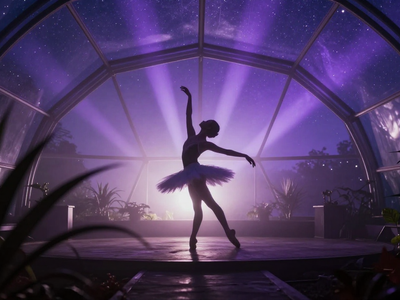
Bernini-R · Image to Video
Generate or edit video with Bernini-R, ByteDance's unified 14B renderer built on Wan 2.2. Upload an image, pick a task mode, describe the motion, hit run.
Bernini-R
Image Editing
Image Generation
Multi-Model
R2V
Video
Video Editing
Video Generation
1.0k



Nodes & Models
LoadVideo
FrameInterpolationModelLoader
film_net_fp16.safetensors
ResolutionSelector
LoadImage
FrameInterpolate
KSamplerSelect
MarkdownNote
PrimitiveInt
ComfySwitchNode
VAELoader
wan_2.1_vae.safetensors
ComfyMathExpression
PrimitiveBoolean
CLIPLoader
umt5_xxl_fp8_e4m3fn_scaled.safetensors
CreateVideo
LoraLoaderModelOnly
Wan21_T2V_14B_lightx2v_cfg_step_distill_lora_rank64.safetensors
GetVideoComponents
BasicScheduler
Video Slice
CLIPTextEncode
SaveVideo
SplitSigmas
SamplerCustom
VAEDecode
BerniniConditioning
UnetLoaderGGUF
UnetLoaderGGUF
UnetLoaderGGUF
UnetLoaderGGUF
UnetLoaderGGUF
ABOUT THE WORKFLOW
Animate or Edit a Video Upload an image and describe the motion to generate a clip from a still. Or enable the video input, load a clip, and describe the edit. Bernini-R supports both in one model by switching the system prompt. Two noise models split the render for sharper detail, speed LoRAs keep the total to six passes, and frame interpolation doubles the output before saving.
Model
Bernini-R 14B by ByteDance Research. Paper 22 May 2026, weights released 1 June 2026 under Apache 2.0. A unified video renderer built on the Wan 2.2 T2V 14B base. Handles text to image, image editing, text to video, image to video, video editing, reference-guided editing, and content insertion through task-specific system prompts. Ranked in the first tier among leading closed-source commercial models on ByteDance's internal video editing arena.
LightX2V speed LoRAs. Loaded at different strengths on the high-noise and low-noise models to bring total sampling to six steps.
FILM frame interpolation. Doubles the rendered frame count for smoother playback.
HOW IT WORKS
Step 1. Upload your image The frame the video animates from. This is the default image-to-video mode. Works great with: character art · product shots · concept frames · location photos
Step 2. Set the task mode The first line of the prompt is a system prompt that tells the model which task to run. It ships as image-to-video. Change it to any supported mode from the reference table on the canvas.

Step 3. Describe the motion or the edit Write the scene description after the system prompt line. "Vintage car running at the road" or "add snow falling across the scene, keep the background unchanged."
Step 4. Enable video input (optional) For video-to-video editing, unmute the LoadVideo and Video Slice nodes (Ctrl+M). Load your clip and switch the system prompt to the v2v or rv2v task prefix.
Step 5. Hit run and download Two noise models split the render at step 3, the frames are decoded and doubled by FILM interpolation, and the clip is saved as an MP4 under video/ComfyUI. Ready for: Premiere · DaVinci Resolve · CapCut · After Effects
First time? Leave every setting as-is. The defaults (9:16 portrait · 81 frames · 6 steps · random seed · i2v mode) are the right starting point for almost everyone.
RECOMMENDED SETTINGS
Quick-start guide. Find the goal that matches yours and copy the settings.
Standard image-to-video clip (most people) — 9:16 portrait · 81 frames · 6 steps · random seed. The right starting point for almost everyone.
Want landscape instead of portrait — Change the aspect ratio on the resolution selector. The model handles 16:9, 9:16, 1:1, and other standard shapes.
Want to edit an existing video — Unmute the LoadVideo and Video Slice nodes, load your clip, and change the system prompt line from i2v to v2v. The model reads your clip and applies the text instruction.
Want reference-guided editing — Switch the system prompt to rv2v, load a reference image alongside the video, and describe which element the reference supplies.
Repeat a take you liked — Set a fixed seed on the first sampler. The second sampler ships on fixed at 0 and does not need to change.
The motion is wrong — Rewrite the scene description. The system prompt sets the task, and the scene description below it controls what happens. Name the movement and the camera.
The clip is choppy — Frame interpolation doubles the count. If it still reads rough, check that FILM interpolation is enabled in the subgraph.
Wrong task mode — Check the reference table on the canvas. Each mode has a specific system prompt prefix. Using the wrong one produces unpredictable results.
Prompt: The prompt has two parts. Line one is the system prompt: "You are a helpful assistant specialized in image-to-video generation." Line two is the scene: "Vintage car running at the road." Change line one to switch tasks. Write line two the way you would describe a shot: name the subject, the motion, and the camera.
LEARN
📹 Videos
ComfyUI 101 Free Course ft. Sebastian Kamph
Floyo 101 for Team Collaboration
✨ Quick links
USE CASES
🎬 Image to Video Animate a still into a short clip with motion, camera moves, and scene continuity.
✂️ Video Editing Change what happens in an existing clip, like adding weather, swapping an element, or restyling, while untouched regions stay frozen.
🎭 Reference-Guided Editing Swap a garment, insert a subject, or apply a style from a reference image into footage.
🎨 Multi-Task Pipeline Switch between generation and editing modes on the same model by changing the system prompt, without swapping checkpoints.
WHAT WORKS BEST / WHAT TO AVOID
✅ Works great
Clear, well-lit images with one readable subject
The correct system prompt prefix for the chosen task
Video edits where unchanged regions should stay frozen
Reference-guided composition and subject insertion
⚠️ May produce softer results
Resolutions above the 480p training range
The wrong system prompt prefix for the task
Complex multi-character choreography
Long clips where the two-model split introduces drift
FAQ
What is Bernini-R? Bernini-R is the renderer component of ByteDance Research's Bernini framework, a unified system for video generation and editing. The paper was released 22 May 2026 and the 14B weights followed on 1 June 2026 under Apache 2.0. It is built on the Wan 2.2 T2V 14B base and handles image-to-video, text-to-video, video-to-video editing, reference-guided editing, content insertion, and subject-to-video through task-specific system prompts. On ByteDance's internal editing arena, it ranked in the first tier alongside leading closed-source commercial models.
What are the task modes? Each mode has a system prompt prefix that tells the model which task to run. The main ones are: t2v (text to video), i2v (image to video), v2v (video editing), rv2v (reference-guided video editing), r2v (subject to video), and ads2v (content insertion). A full table sits on the canvas inside the workflow.
How does the two-model split work? The render uses two GGUF noise models. The high-noise model handles the first three steps where layout and motion are decided. The low-noise model handles the remaining steps where detail is refined. Each loads its own speed LoRA at a different strength. Splitting the work this way gives more model capacity per step without doubling the cost.
Is Bernini-R free for commercial use? Yes. The weights and code are released under Apache 2.0, which allows commercial use, modification, and self-hosted deployment with no revenue threshold. Attribution in derivative works is required.
What resolution does Bernini-R output? The model was trained at 480p. This workflow renders at that resolution and doubles the frame count with FILM interpolation for smoother playback. Going higher than 480p costs time without a quality guarantee from the training data.
What is the difference between Bernini-R and the full Bernini pipeline? Bernini-R is the renderer alone. The full Bernini pipeline adds a Qwen 2.5-VL-7B semantic planner that reasons about the edit before passing instructions to the renderer. This workflow runs the renderer directly with your prompt, without the planner. The full pipeline was released 11 June 2026.
How to run Bernini-R online? You can run Bernini-R online through Floyo. No installation, no setup, no GGUF downloads. Open the workflow in your browser, upload an image, set the task mode, and hit run. Free to try.
WHY FLOYO?
Floyo is the only platform with team collaboration for ComfyUI in the browser. You run workflows with no install. You share run history, assets, and models across your team. You pay only when you generate. Floyo supports open-source and closed-source models.
A designer runs an edit and likes the result. A teammate opens that exact run from shared history and keeps going. No file handoffs. No version confusion.
For studios and enterprise teams, Floyo adds private workspaces, pooled resources, and a team usage dashboard. Other ComfyUI cloud tools run for one person at a time. Floyo runs for the whole team, with transparent per-generation costs.
Ready to try it? Upload an image, set the task mode, and run it. The settings are already set.
Questions? Watch the free course or check the FAQ above.
Read more
%20(1)_1777105835912.webp?width=400&height=300&quality=80&resize=contain&format=origin)