Kling O3 Pro Image to Video with Reference
API
Image to Video
Video
639
Nodes & Models
KlingO3ProReference_floyo
VideoToFrames
WorkflowGraphics
LoadImage
VHS_VideoCombine
VHS_VideoCombine
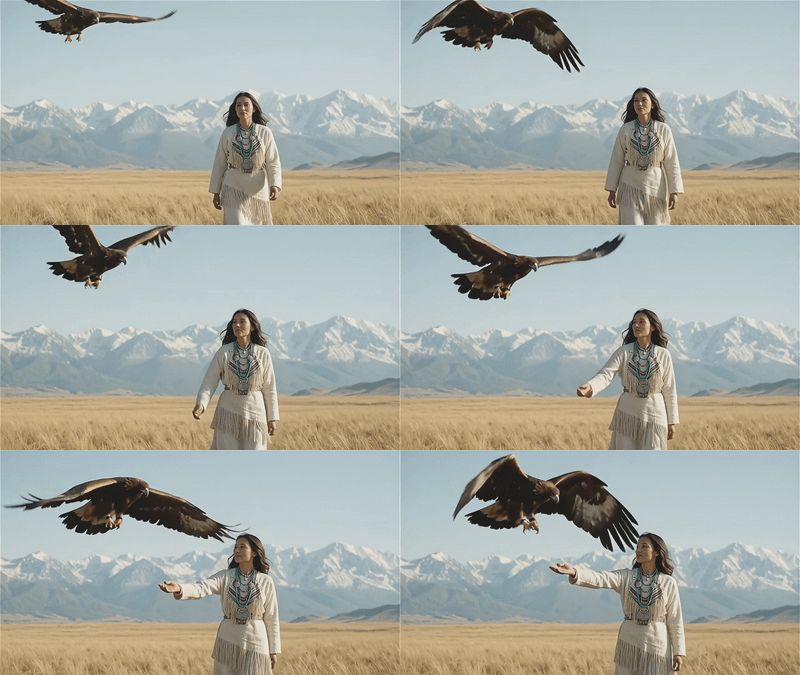
Upload an image and a prompt, and Kling O3 Pro animates it. The reference image slot anchors the subject's appearance across the clip. Start and end frame inputs let you define where the video begins and where it lands.
This is the Pro tier. It handles complex motion, detailed scenes, and scenes with multiple interacting elements better than standard. Default output is 5 seconds at 24fps, 16:9.
How do you use Kling O3 Pro image to video with reference?
Upload a start image, write a prompt describing the action, and Kling O3 Pro generates the animation. Reference image, end image, multi-prompt, audio, and shot type are all optional. Most runs need only the start image and prompt.
Start image The first frame of the video. The model animates outward from this — composition, lighting, and subject placement here set the scene for everything that follows.

Prompt Describe the action. "Make someone pick a piece up and eat it" is a good example of the specificity that works. Name the action, the subject behavior, and any camera move you want. The model follows action instructions closely.
Reference image Optional. Upload a face or subject reference to anchor who appears across the clip. Most useful when the start image shows a scene but you want to ensure a specific person's appearance carries through.
Element 1 frontal image A second reference slot for a front-facing view of the subject. Use it alongside the reference image for tighter face consistency across the clip.
End image Optional. Upload a target frame to guide where the clip should finish visually. Leave it blank and the model generates the ending from the prompt and start frame.
Duration 5 seconds by default. Increase if the action needs more room. Pro handles longer durations with better temporal consistency than standard.
Aspect ratio 16:9 by default. Switch to 9:16 for vertical or 1:1 for square.
Shot type "Customize" by default, letting your prompt control framing. Pick a specific option to lock in a camera angle.
Generate audio Off by default. Turn it on to generate audio in the same run.
Multi-prompt Optional. Pass a sequence of prompts for clips where the action or mood shifts mid-video.
What is Kling O3 Pro image-to-video with reference good for?
Kling O3 Pro reference mode is for when quality on complex motion matters more than speed. The Pro tier handles detailed actions — hands interacting with objects, facial expressions, multi-element scenes — more reliably than standard. The reference inputs give you subject control on top of that.
Good scenarios: food, product, or lifestyle shots where a specific action (picking up, eating, handling an object) needs to look natural and detailed. Portrait animation where face consistency across the clip is important. Any scene complex enough that Standard tier produces inconsistent motion or artifacts.
The tradeoff vs Standard: Pro takes longer to generate. If you're still iterating on the prompt or testing compositions, run Standard first to find what works, then switch to Pro for the final output.
FAQ
When should I use Kling O3 Pro instead of Kling O3 Standard for image to video? Use Pro when the action is detailed or complex — hands, food, facial expressions, object interaction. Standard is faster and works well for simpler motion like walking or camera pans. Pro is the right call when Standard output shows inconsistent motion or loses detail mid-clip.
What's the reference image for in Kling O3 Pro image to video? It anchors the subject's appearance across the clip, independent of what's in the start frame. Use it when you need a specific person or character to appear consistently, especially if the start image is a scene rather than a portrait.
Does the end image input work reliably in Kling O3 Pro? It guides the clip toward a target final frame, but it's not a hard constraint. The model tries to land near that frame while keeping motion natural. The further the end image is from the start, the more loosely it's followed.
Can Kling O3 Pro generate audio in the same run? Yes. Toggle generate_audio on and audio is generated alongside the video. Leave it off if you're handling sound separately.
How do you run Kling O3 Pro image to video with reference online? You can run it online through Floyo. No installation, no setup. Open the workflow in your browser, upload your image, and hit run.
Read more