Kling Image to Video with Reference Control
API
image to video
kling
text to video
Video
628
Nodes & Models
KlingO3StandardReference_floyo
VideoToFrames
LoadImage
WorkflowGraphics
VHS_VideoCombine
VHS_VideoCombine
Kling image-to-video with prompt-driven motion and shot control.
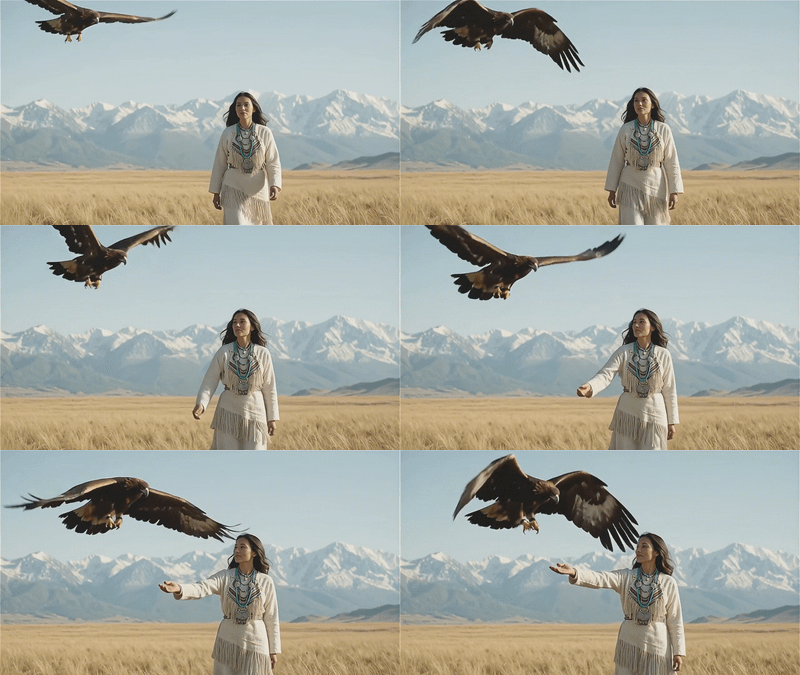
Upload a start image, write a prompt describing the motion or scene, and Kling's O3 Standard model generates a video. The output is previewed in the browser and saved as an H264 MP4.
Default output: 5 seconds, 16:9. Generation time runs around 90 seconds.
How do you control the output in Kling image-to-video?
Use the prompt and shot type settings to direct how your image moves. Set duration and aspect ratio before running. The model reads your start image and your prompt together to generate motion that fits the scene.

Start image Upload the image you want to animate. This is your anchor frame. The model reads it closely, so composition and lighting carry into the video. Want a specific subject to stay central? Frame it clearly in your image before running.
Prompt Describe the motion or atmosphere you want. Be specific about movement direction, pacing, or camera feel. The prompt works with the image, not against it.
Duration Default is 5 seconds. Longer durations give more room for motion to develop, but generation time increases.
Shot type Set to "customize" by default. This controls the framing style. If you want a specific cinematic feel, set it here.
Aspect ratio Default is 16:9. Switch to 9:16 for vertical video or 1:1 for square. Set this before running.
Generate audio Off by default. Toggle on if you want the model to add ambient audio to the output.
What is Kling image-to-video good for?
Kling O3 Standard is built for turning still images into short, smooth clips. It works well for product showcases, character animation, fashion and lifestyle content, and anything where you have a strong reference image and want motion that feels natural.
Give it a clean, well-lit image and a clear motion prompt, and it delivers consistent results. The O3 Standard tier runs faster than higher-tier models, making it practical for iteration.
Where it has limits: complex multi-character scenes or highly specific camera movements may not follow the prompt precisely. For tighter control over camera paths, a ControlNet-based video workflow would serve better.
FAQ
What image formats work with Kling image-to-video? Standard image formats load via the image upload node. PNG and JPEG both work. Resolution affects quality, so use the highest-quality version of your image when possible.
How long does generation take? The example workflow shows around 90 seconds for a 5-second clip. Actual time depends on server load and clip duration.
Can I use an end image to control where the video finishes? The workflow has an optional end image input. Connect an image there to constrain the final frame. Leave it empty to let the model determine the ending.
What aspect ratios does Kling support? The workflow exposes aspect ratio as a dropdown. Common options include 16:9, 9:16, and 1:1. Set it before running to match your target output format.
How do I run Kling image-to-video online? You can run Kling image-to-video online through Floyo. No installation, no setup. Open the workflow in your browser, upload your start image, write your prompt, and hit run.
Read more