FLUX.2 Klein 9B · Image Editing With KV Cache
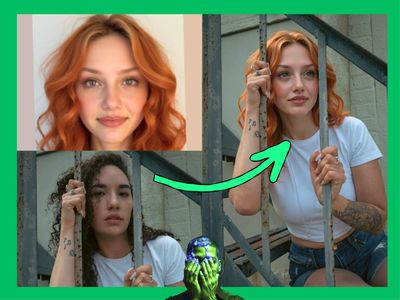
Edit images with Flux 2 Klein 9B in 4 steps. KV Cache speeds every run by reusing attention work across steps. Upload an image, describe the edit, hit Run.
flux
flux 2 klein
Image
image to image
style transfer
1.4k

_1776914836171.png?width=1400&height=620&quality=80&resize=contain)
_1776914841087.png?width=1400&height=620&quality=80&resize=contain)

_1776914836171.png?width=104&height=104&quality=80&resize=cover)
_1776914841087.png?width=104&height=104&quality=80&resize=cover)

Nodes & Models
LoadImage
UNETLoader
flux-2-klein-9b-kv.safetensors
KSamplerSelect
CLIPLoader
qwen_3_8b_fp8mixed.safetensors
RandomNoise
VAELoader
flux2-vae.safetensors
VAEEncode
FluxKVCache
ReferenceLatent
ConditioningZeroOut
CFGGuider
SamplerCustomAdvanced
PreviewImage
EmptyFlux2LatentImage
GetImageSize
Flux2Scheduler
VAEDecode
CLIPTextEncode
ImageResize+
ImageResize+
ImageResize+
ABOUT THE WORKFLOW
Edit an Image in Four Passes Upload an image and describe the change. The model edits the scene in 4 denoising steps while keeping the original structure. The KV cache variant computes the reference image once on the first step and reuses it for the rest, making edits up to 2.5x faster than the standard 9B model. The result appears in a preview.
Model
FLUX.2 Klein 9B KV by Black Forest Labs. Released January 2026. A 9 billion parameter rectified flow transformer with a Qwen 3 8B text encoder, step-distilled to 4 inference steps. The KV variant caches key-value pairs from the reference image on the first denoising step and reuses them for the remaining steps, cutting redundant computation. Open weights under the FLUX Non-Commercial License. Requires about 29GB VRAM locally.
HOW IT WORKS
Step 1. Upload your image The image you want to edit. The model reads it as a reference and preserves its structure. Works great with: photos · landscapes · product shots · renders
Step 2. Describe the change Say what should change in plain language. "Change the scene to winter season" or "replace the sky with a dramatic sunset."
Step 3. Hit run and preview The model encodes the reference, caches the KV pairs, edits the scene in 4 passes, and shows the result in the preview. Right-click to save. Ready for: Photoshop · Figma · Canva · any editor
First time? Leave every setting as-is. The defaults (1024 x 1024 · 4 steps · CFG 1 · fixed seed) are the right starting point for almost everyone.
RECOMMENDED SETTINGS
Quick-start guide. Find the goal that matches yours and copy the settings.
Standard edit (most people) — 1024 x 1024 · 4 steps · CFG 1 · fixed seed. The right starting point for almost everyone.
The edit is too strong — Lower CFG below 1. At lower values the model preserves more of the original.
The edit is too subtle — Raise CFG above 1. Higher values push the model to follow the prompt more aggressively.
Want a different output size — Change width and height inside the Edit Image subgraph. Stay near 1 megapixel total.
Want a different take — Change the seed. It ships on fixed (0). Set it to random for variation on every run.
Want to add more reference images — The model supports multi-reference editing. Add more ReferenceLatent nodes inside the Edit Image subgraph and connect them.
The edit broke the composition — Simplify the prompt. Describe one change at a time. Compound edits ("change the season AND add a person AND move the camera") fight each other.
Prompt: Describe the destination, not the difference. "Winter scene, snow-covered ground, bare trees, overcast sky, cold light" gives you more than "make it winter." The model reads the reference image for what to keep and the prompt for what to change.
LEARN
📹 Videos
ComfyUI 101 Free Course ft. Sebastian Kamph
Floyo 101 for Team Collaboration
✨ Quick links
USE CASES
🌦️ Scene and Season Swaps Change the time of day, the weather, or the season in a photo while keeping the composition intact.
🖼️ Style and Atmosphere Edits Shift the mood, the colour grade, or the lighting of an image from a text instruction.
🛍️ Product Shot Variations Generate seasonal, contextual, or thematic variants of a product image from one source.
⚡ Fast Iteration The 4-step schedule with KV caching finishes edits in under a second on datacenter hardware, so you can test ideas at speed.
WHAT WORKS BEST / WHAT TO AVOID
✅ Works great
Single, clear edit instructions
Scene, weather, and lighting changes
Well-composed source images with clear subjects
One edit at a time
⚠️ May produce softer results
Compound edits that ask for multiple changes at once
Edits that require adding or removing large objects
Source images with heavy text or fine detail that must be preserved
Expecting the model to generate readable text
FAQ
What is FLUX.2 Klein 9B KV? <cite index="7-1">FLUX.2 Klein 9B KV is an optimized variant of FLUX.2 Klein 9B with KV-cache support for accelerated multi-reference editing.</cite> It is a 9 billion parameter model with a Qwen 3 8B text encoder, step-distilled to 4 inference steps. <cite index="12-1">The KV cache variant splits denoising into two phases: Step 0 computes and caches the key-value projections for the reference tokens, and Steps 1 to 3 reuse those cached values instead of recomputing them.</cite> This gives up to 2.5x speedup on reference-based edits.
How does the KV cache work? <cite index="12-1">In standard image editing, each denoising step concatenates reference image tokens with the noisy output tokens and runs full attention over the entire sequence. Since reference tokens do not change across steps, this is wasteful.</cite> The KV variant computes the reference once and reuses the cached attention keys and values for the remaining steps.
Is FLUX.2 Klein 9B free for commercial use? No. <cite index="10-1">FLUX.2 Klein 4B is fully open under Apache 2.0, while Klein 9B is available under the FLUX Non-Commercial License.</cite> Commercial use of the 9B model requires a separate agreement from Black Forest Labs.
How does this compare to FLUX Kontext? FLUX Kontext is built on FLUX.1 Dev (12B) and is designed for character-consistent editing where the subject's identity is preserved across scene changes. FLUX.2 Klein 9B KV is built on the newer FLUX.2 architecture (9B) and is designed for fast scene editing with KV-cached reference acceleration. Pick Kontext for identity-locked character work, and Klein 9B KV for fast scene and atmosphere edits.
How does this compare to FLUX.2 Klein 4B? <cite index="10-1">Klein 9B matches or exceeds models 5x its size in under half a second.</cite> Klein 4B is smaller and runs under Apache 2.0. Pick 4B for commercial use and lighter hardware, 9B KV for the highest quality edits in the Klein family.
Why is there no save step? The workflow outputs to a PreviewImage node with no SaveImage wired after it. Right-click the preview to download. Adding a SaveImage node would make downloads automatic.
How to run FLUX.2 Klein 9B online? You can run FLUX.2 Klein 9B online through Floyo. No installation, no setup, no 29GB VRAM requirement. Open the workflow in your browser, upload an image, describe the edit, and hit run. Free to try.
WHY FLOYO?
Floyo is the only platform with team collaboration for ComfyUI in the browser. You run workflows with no install. You share run history, assets, and models across your team. You pay only when you generate. Floyo supports open-source and closed-source models.
A designer runs an edit and likes the result. A teammate opens that exact run from shared history and keeps going. No file handoffs. No version confusion.
For studios and enterprise teams, Floyo adds private workspaces, pooled resources, and a team usage dashboard. Other ComfyUI cloud tools run for one person at a time. Floyo runs for the whole team, with transparent per-generation costs.
Ready to try it? Upload an image, describe the change, and run it. Four steps, KV-cached, done.
Questions? Watch the free course or check the FAQ above.
Read more