FLUX.2 Klein Image Expansion · I2I For Short Drama
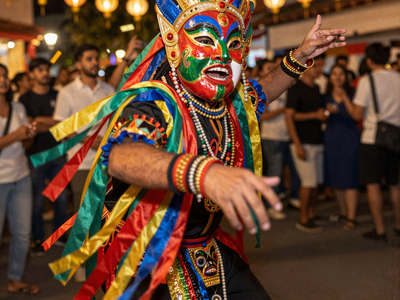
Expand any photo with new content on any side using FLUX.2 Klein 9B for outpainting and SeedVR2 7B Sharp for upscaling. Upload a photo, set the expansion width, and hit run.
flux 2 klein
Image
image expansion
outpaint
Video
193
_1784728284241.png?width=1400&height=620&quality=80&resize=contain)
_1784728284241.png?width=1400&height=620&quality=80&resize=contain)
_1784728284241.png?width=1400&height=620&quality=80&resize=contain)
_1784728284241.png?width=104&height=104&quality=80&resize=cover)
_1784728284241.png?width=104&height=104&quality=80&resize=cover)
_1784728284241.png?width=104&height=104&quality=80&resize=cover)

Nodes & Models
LoadImage
GetNode
PreviewImage
KSamplerSelect
MarkdownNote
RandomNoise
UNETLoader
flux-2-klein-9b.safetensors
CLIPLoader
qwen_3_8b_fp8mixed.safetensors
VAELoader
flux2-vae.safetensors
LayerUtility: ImageScaleByAspectRatio V2
ImagePadForOutpaint
SaveImage
Image Comparer (rgthree)
GetImageSize
SetNode
DifferentialDiffusion
CLIPTextEncode
VAEEncode
DrawMaskOnImage
EmptyFlux2LatentImage
Flux2Scheduler
ConditioningZeroOut
ReferenceLatent
InpaintModelConditioning
CFGGuider
SamplerCustomAdvanced
VAEDecode
FloyoStickyNote
Int
SeedVR2LoadDiTModel
SeedVR2LoadVAEModel
ema_vae_fp16.safetensors
CR Prompt Text
SeedVR2VideoUpscaler
Int
SeedVR2LoadDiTModel
SeedVR2LoadVAEModel
ema_vae_fp16.safetensors
SeedVR2VideoUpscaler
SeedVR2LoadDiTModel
SeedVR2LoadVAEModel
ema_vae_fp16.safetensors
SeedVR2VideoUpscaler
CR Prompt Text
ABOUT THE WORKFLOW
Expand an Image
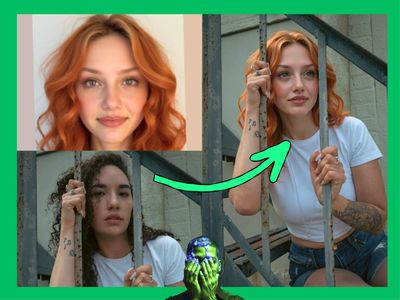
Upload a photo and get a wider version with new content generated on either side. FLUX.2 Klein fills the expanded areas using the original image as a reference, Differential Diffusion blends the edges smoothly, and SeedVR2 sharpens the full result. That's it.
Model
FLUX.2 Klein 9B by Black Forest Labs (FLUX Non-Commercial License). Fills the expanded canvas by treating the original image as a reference latent. Differential Diffusion blends the transition so the new content reads as part of the original scene.
SeedVR2 7B Sharp by ByteDance (Apache 2.0). Upscales and sharpens the expanded result to a clean final output.
HOW IT WORKS
Step 1. Upload your image
The photo you want to expand. The image is auto-scaled to a longest side of 1024px before processing. Works best with landscape, portrait, and environmental scenes.
Works great with: landscapes · interiors · street scenes · product shots
Step 2. Set the expansion direction
The default adds 1000 pixels to the left and 1000 to the right, doubling the width. Set top and bottom values to expand vertically too. Adjust any direction to control where the new content appears.
Step 3. Write a prompt (optional)
Describe what should appear in the expanded areas. Leave it empty to let the model extend the existing scene naturally. Write a specific prompt if you want to guide what fills the new space.
Step 4. Hit run and download
FLUX.2 Klein fills the expanded areas, blends the edges, then SeedVR2 upscales and sharpens the full result. Preview it in the workflow, then download.
Ready for: Photoshop · Figma · print · any editor
First time? Leave every setting as-is. The defaults (1000px left + 1000px right · 4 steps · 50 feathering · 2048 upscale) are the right starting point for almost everyone.
RECOMMENDED SETTINGS
Quick-start guide. Find the goal that matches yours and copy the settings.
Standard expansion (most people) — 1000px left + 1000px right · top/bottom 0 · 4 steps · 50 feathering · 2048 upscale · fixed seed. The right starting point for almost everyone.
Want to expand in one direction only — Set one side to 0 and the other to the amount you want. "1000 left, 0 right" extends only to the left.
Want to expand vertically — Set expand top and expand bottom to add pixels above and below. Combine with horizontal expansion for a full canvas extension.
Want a smaller expansion — Lower the pixel values to 500 or less per side. Smaller expansions produce tighter blends with less room for artifacts.
Want a smoother blend at the edges — Raise feathering above 50. Higher values create a softer transition between the original and the generated content.
Want to guide what fills the new space — Write a specific prompt. "Continue the forest with taller trees and a mountain range in the distance" steers the model. Leave the prompt empty to let it extend the scene on its own.
Want a different take — Change the seed. Each seed produces a different version of the expanded content.
Prompt: Optional. When empty, the model extends the existing scene by reading the colors, lighting, and depth cues in your photo. When filled, keep it descriptive and consistent with what is already in the image. "Extend the beach scene with more sand and distant cliffs" works better than "add a beach."
LEARN
📹 Videos
ComfyUI 101 Free Course ft. Sebastian Kamph
Floyo 101 for Team Collaboration
✨ Quick links
USE CASES
📐 Aspect Ratio Conversion
Turn a square photo into a wide banner or a portrait into a landscape without cropping the subject. Expand the canvas to fit the target format and let the model fill in the missing space.
🖼️ Print and Banner Production
Extend a photo to fill a wide banner, billboard, or print layout. The SeedVR2 upscaler sharpens the result to a resolution that holds up at large sizes.
🎬 Filmmaking and Pre-visualization
Widen a 4:3 or 1:1 frame to a cinematic 16:9 or 2.39:1 aspect ratio. Useful for converting vertical or square footage into a wider composition.
🛍️ Product and E-commerce Photography
Expand a tight product shot to add breathing room on the sides. Give the image space for text overlays, logos, or additional layout elements without reshooting.
WHAT WORKS BEST / WHAT TO AVOID
✅ Works great
Environmental scenes with repeating patterns (sky, water, forest, walls)
Photos with even lighting across the frame
Moderate expansions (1000px per side or less)
Landscape, interior, and architectural photos
⚠️ May produce softer results
Extreme expansions (more than 2x the original width)
Photos with strong perspective lines or vanishing points at the edges
Complex foreground subjects that extend to the border
Heavy vignetting or uneven exposure at the edges
FAQ
What is image expansion (outpainting)?
Outpainting extends an image beyond its original borders by generating new content that blends seamlessly with the existing scene. This workflow adds pixels to any side of the image, using the original as a reference. FLUX.2 Klein fills the expanded area, Differential Diffusion blends the edges, and SeedVR2 sharpens the final result.
How does the blending work at the edges?
The workflow uses Differential Diffusion to create a smooth gradient between the original image and the newly generated content. The feathering setting controls how wide this transition zone is. At the default of 50, the blend is subtle and hard to spot. Raise it for an even softer transition.
Can I expand in all four directions at once?
Yes. Set expand left, right, top, and bottom to any pixel value. You can expand in one direction, two, or all four in a single run. Each direction is independent.
What does SeedVR2 do in this workflow?
SeedVR2 7B Sharp by ByteDance is a video and image upscaler that runs as a second pass after the outpainting is complete. It sharpens the full expanded image to a target resolution of 2048px, cleaning up any softness from the generation step.
What license does FLUX.2 Klein 9B use?
The 9B model falls under the FLUX Non-Commercial License from Black Forest Labs. It is open-weights (downloadable and runnable locally), but commercial use requires a separate arrangement with Black Forest Labs. SeedVR2 7B Sharp is Apache 2.0. Review Black Forest Labs' terms before using outputs commercially.
Can I control what appears in the expanded area?
Yes. Write a prompt describing what should fill the new space. When the prompt is empty, the model extends the existing scene automatically by reading the colors, lighting, and depth cues in your photo. A specific prompt gives you control over the content.
How to run FLUX.2 Klein outpainting online?
You can run FLUX.2 Klein outpainting online through Floyo. No installation, no setup, no API key to wire up. Open the workflow in your browser, upload an image, set the expansion directions, and hit run. Free to try.
WHY FLOYO?
Floyo is the only platform with team collaboration for ComfyUI in the browser. You run workflows with no install. You share run history, assets, and models across your team. You pay only when you generate. Floyo supports open-source and closed-source models.
A designer expands an image and likes the result. A teammate opens that exact run from shared history and keeps going. No file handoffs. No version confusion.
For studios and enterprise teams, Floyo adds private workspaces, pooled resources, and a team usage dashboard. Other ComfyUI cloud tools run for one person at a time. Floyo runs for the whole team, with transparent per-generation costs.
Ready to try it?
Upload a photo, set the expansion width, and run it. The settings are already set.
Questions? Watch the free course or check the FAQ above.
Read more