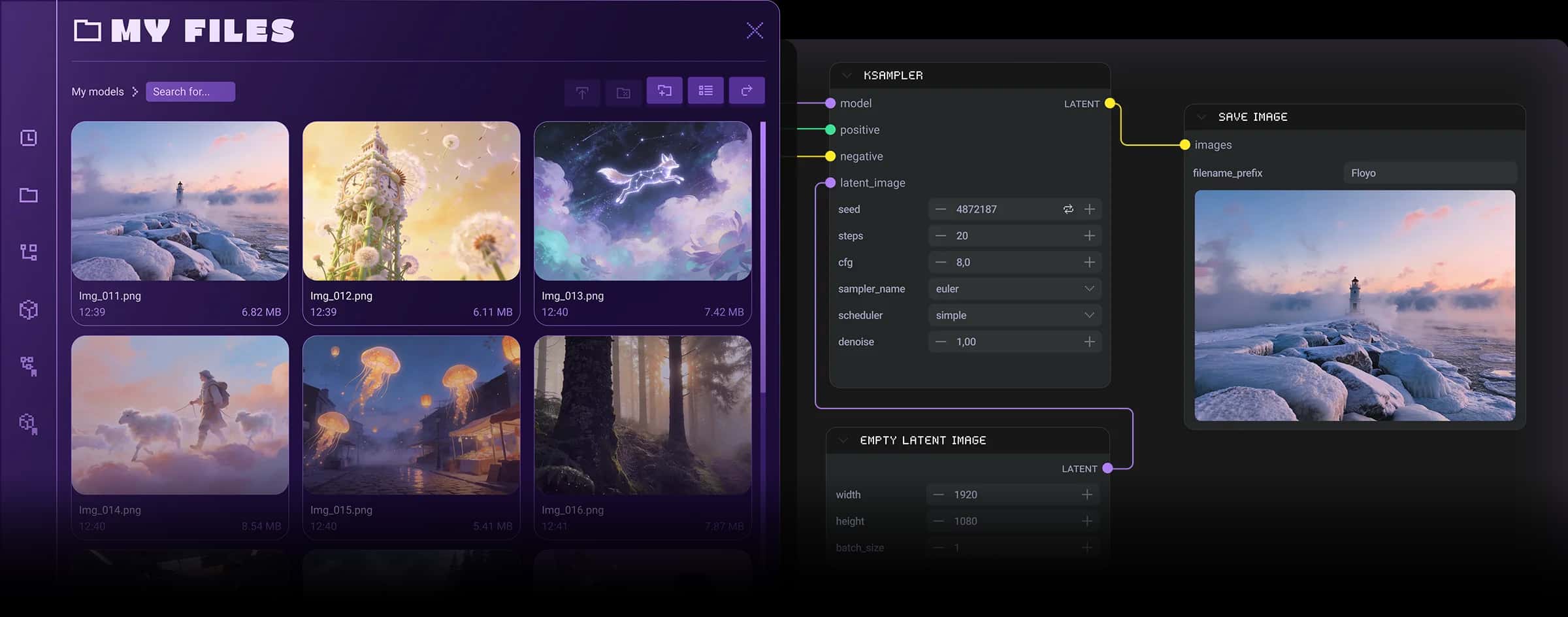
ComfyUI VLM Nodes is a specialized extension designed for integrating vision-language models with ComfyUI, enhancing its capabilities in processing and generating multimedia content. This tool supports a variety of advanced models and functionalities, streamlining the workflow for users dealing with complex visual and textual data.
- Supports multiple modern vision-language models, including Qwen3-VL and Florence-2, allowing for flexible and powerful multimedia processing.
- Features a live text output streaming capability that updates in real-time, enhancing user interaction and feedback during model execution.
- Provides an extensive toolkit for text manipulation, including JSON parsing and dynamic prompt generation, which facilitates more complex and structured workflows.
Context
This tool extends the functionality of ComfyUI by introducing nodes specifically tailored for vision-language models (VLMs). It allows users to seamlessly integrate various models into their workflows, enhancing the platform's multimedia processing capabilities.
Key Features & Benefits
The ComfyUI VLM Nodes offer a range of practical features that significantly enhance user experience and model performance. Key functionalities include support for multiple cutting-edge VLMs, real-time text output streaming, and a comprehensive text toolkit that allows for advanced manipulation and parsing of textual data. These features streamline the process of working with complex visual and textual information, making it easier for users to generate high-quality outputs.
Advanced Functionalities
The extension includes advanced capabilities such as structured detection and segmentation using stable, typed sockets, which improve the accuracy and usability of model outputs. Additionally, it offers adaptive video intelligence features that enable efficient processing of video data by intelligently sampling frames based on scene changes and motion, optimizing performance while maintaining quality.
Practical Benefits
By utilizing ComfyUI VLM Nodes, users can significantly improve their workflow efficiency and control over multimedia processing tasks. The integration of real-time streaming and structured text manipulation tools allows for greater flexibility and responsiveness during model execution, ultimately leading to higher-quality outputs and a more streamlined user experience.
Credits/Acknowledgments
This project is developed by Gökay Aydoğan and is available under an open-source license. Users are encouraged to cite the software in their work and can find citation details in the repository.