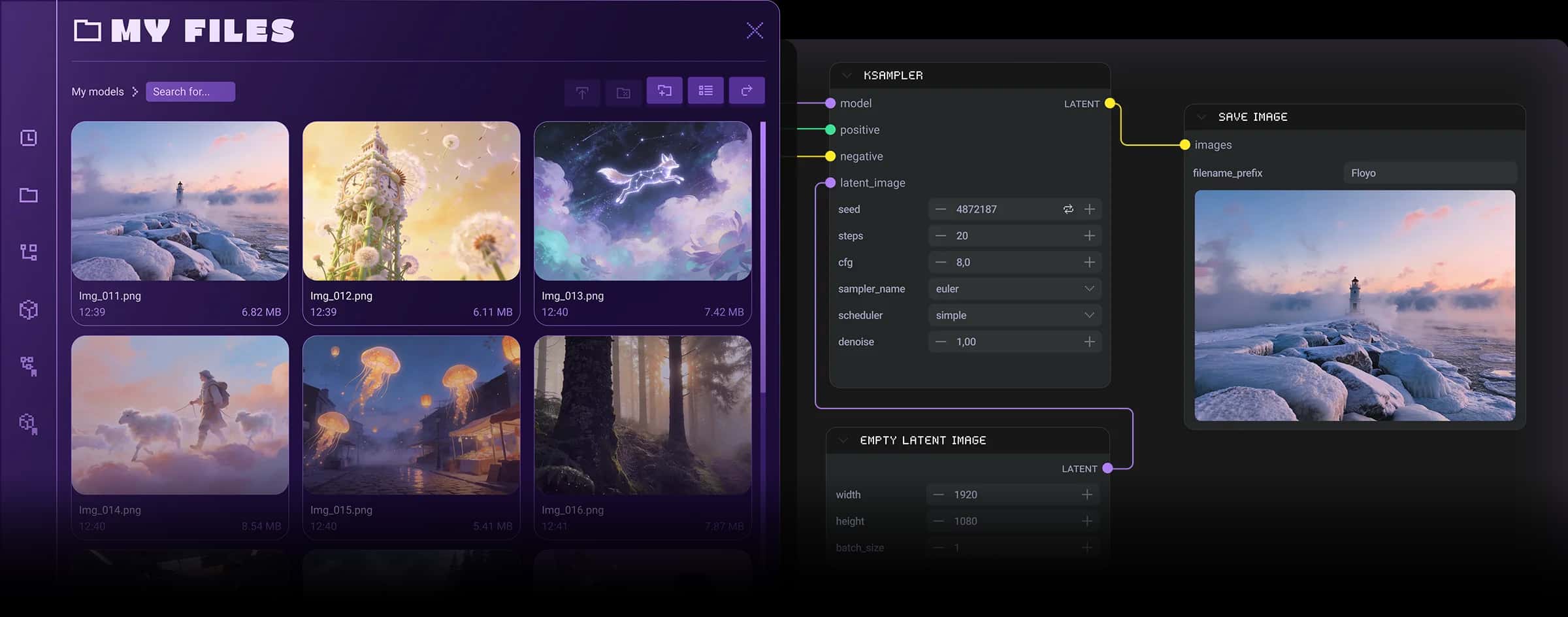
A text randomizer tool for ComfyUI that produces varied and unpredictable text outputs based on user-defined options. It enhances creative workflows by allowing users to generate multiple text permutations effortlessly.
- Generates random text combinations from specified options within brackets.
- Provides real-time error checking for mismatched brackets and parentheses.
- Offers functionalities to concatenate and display final text outputs for easier debugging.
Context
The ComfyUI Text Randomizer is a specialized tool designed to enhance the ComfyUI experience by allowing users to create random text outputs based on predefined options. Its main purpose is to facilitate the generation of diverse text strings, which can be particularly useful in creative applications such as storytelling or prompt generation for AI models.
Key Features & Benefits
The tool includes several practical features that significantly improve its usability. The basic text randomizer allows users to input text with options enclosed in brackets, generating various combinations. The error-checking functionality ensures that users can identify mismatches in brackets or parentheses in real-time, preventing potential issues during workflow execution. Additionally, the ability to concatenate text and display the final output aids in debugging, ensuring users can verify what is being processed.
Advanced Functionalities
Among its advanced capabilities, the Text Randomizer supports nested brackets for more complex randomization scenarios, allowing for an even greater variety of text outputs. Users can also create empty options within their randomization, which adds flexibility to the text generation process.
Practical Benefits
This tool streamlines the workflow in ComfyUI by providing an efficient way to generate and manipulate text. By reducing the need for manual text variations and offering real-time feedback, it enhances user control and overall efficiency, allowing for a smoother creative process.
Credits/Acknowledgments
The ComfyUI Text Randomizer was developed by contributors to the open-source community, with the project hosted on GitHub under a suitable license.