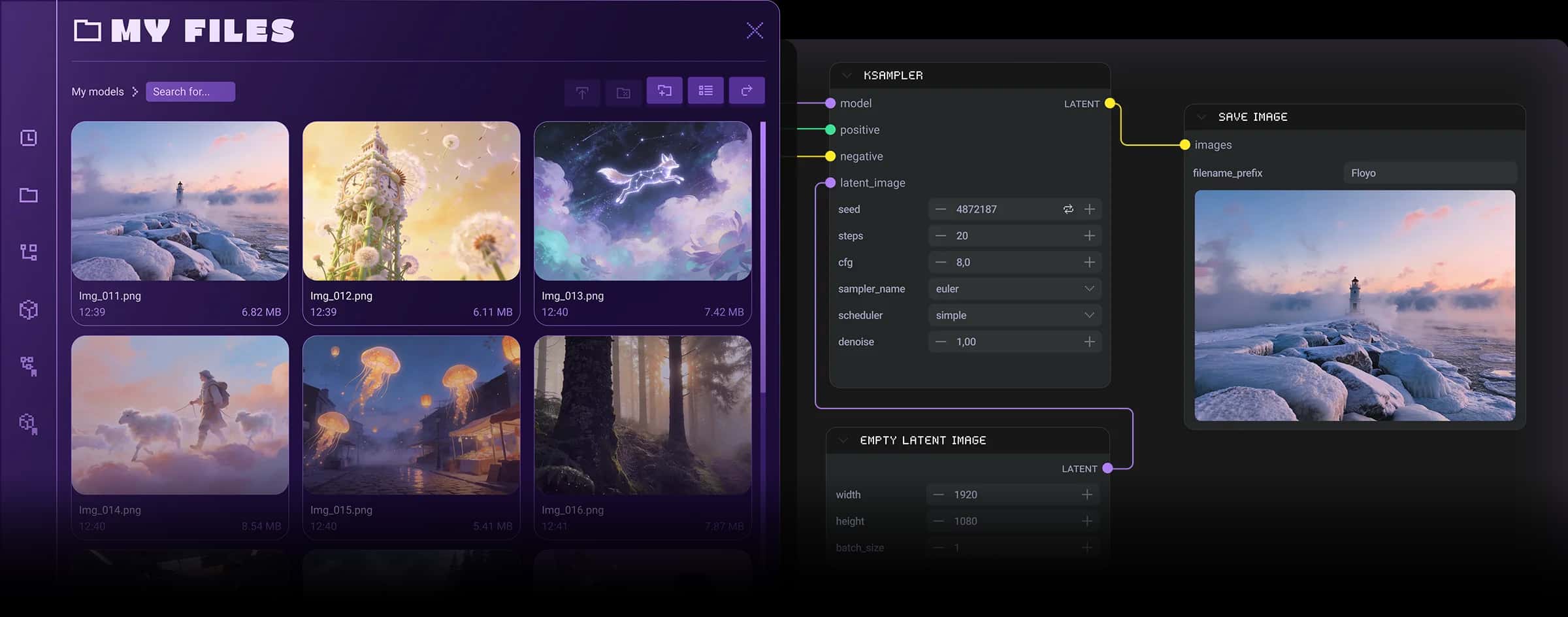
Batch-tagging datasets for LoRA training of SDXL models is made possible with this tool, allowing users to train directly within ComfyUI without relying on external tools like BSS or TrainTools-MZ. It utilizes established libraries such as Diffusers, PEFT, and PyTorch for its core functionality, ensuring compatibility and ease of use.
- Enables interactive crop editing and dataset previews for improved training accuracy.
- Supports advanced training features like independent rank/alpha adjustments and custom sampling techniques.
- Facilitates a streamlined workflow by integrating multiple native nodes for a comprehensive training experience.
Context
This tool serves as a dataset bridge specifically designed for training Illustrious SDXL LoRA models within the ComfyUI environment. Its primary aim is to enhance the training process by providing an integrated solution that minimizes the need for external dependencies.
Key Features & Benefits
The tool boasts several practical features, such as interactive crop editing and aspect-ratio management, which allow users to refine their datasets effectively. Additionally, it supports advanced training options, including various optimizers and sampling strategies, enabling users to customize their training sessions to achieve optimal results.
Advanced Functionalities
Among its advanced capabilities, the tool offers dual-CLIP long-caption chunking and the ability to generate sample images at each training epoch. These features provide greater control over the training process and facilitate better evaluation of model performance over time.
Practical Benefits
This tool significantly enhances workflow efficiency by integrating dataset tagging and training into a single platform, which reduces the need for repetitive tasks like reimporting and retagging datasets. Users can expect improved control over their training processes, ultimately leading to higher quality outputs from their models.
Credits/Acknowledgments
The project is developed under the MIT license, with contributions from various authors. Notably, the tagging models utilized within the tool are credited to SmilingWolf, and users are encouraged to respect the licenses associated with upstream models and datasets.