Z-Image Turbo with Controlnet 2.1 and Qwen VLM
Creating Accurate Variety of Images
API
Controlnet
Floyo API
Image
Image2Image
LoRA
LoRAs
Z-Image Turbo
2.7k




Nodes & Models
VLM_floyo
CLIPLoader
qwen_3_4b.safetensors
VAELoader
ae.safetensors
Note
UNETLoader
z_image_turbo_bf16.safetensors
LoadImage
ModelPatchLoader
Z-Image-Turbo-Fun-Controlnet-Union-2.1.safetensors
LoraLoaderModelOnly
dejpeg_v3.safetensors
ImageScaleToMaxDimension
GetImageSize
CLIPTextEncode
EmptySD3LatentImage
PreviewImage
QwenImageDiffsynthControlnet
ConditioningZeroOut
ModelSamplingAuraFlow
KSampler
VAEDecode
SaveImage
ImageConcanate
AIO_Preprocessor
AIO_Preprocessor
Overview
Z-Image Turbo is a 6B diffusion transformer that generates high‑quality images in a few steps and works well with ControlNet nodes in ComfyUI for pose, depth, or edge guidance. ControlNet (via DWPose, Canny, Depth, or Union) lets you lock in composition, pose, and structure from a reference image while still using text to define style and details. Qwen VLM (Qwen-VL / Qwen2.5-VL) is a vision‑language model that can analyze images, describe them, refine prompts, or validate whether the generated image matches your textual intent.
Who can use it
This combo is useful for:
Creators who want consistent characters and poses across many images, using ControlNet for structure and Qwen VLM to keep prompts and outputs on‑brief.
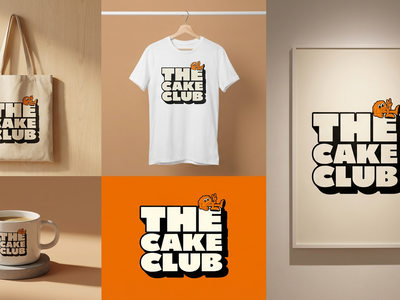
Designers and marketers needing accurate branded visuals, where Qwen VLM checks logos, colors, or layout while Z-Image Turbo + ControlNet keep layout fixed.
ComfyUI power users building complex graphs that mix text‑to‑image, reference guidance, and VLM‑driven prompt refinement for higher reliability.
Anyone doing dataset creation or concept exploration who wants an automated loop: generate → analyze with Qwen VLM → adjust prompt or ControlNet → regenerate.
Use case workflow
A typical workflow is:
Feed a pose or layout image into ControlNet (DWPose, Depth, or Canny) and write an initial prompt for Z-Image Turbo, then generate a first batch of guided images.
Send one or more outputs to Qwen VLM, ask it to describe the image or compare it to your intended description, and use its detailed text as an improved prompt or prompt expansion.
Regenerate with Z-Image Turbo + ControlNet using the refined prompt, optionally repeating the loop until Qwen VLM’s analysis says the image closely matches the target concept, pose, and details.
This way, Z-Image Turbo provides speed and quality, ControlNet provides spatial accuracy, and Qwen VLM provides semantic accuracy, giving you a robust system for creating a wide variety of precise, repeatable images.
Read more
_1786522681696.png?width=400&height=300&quality=80&resize=cover)