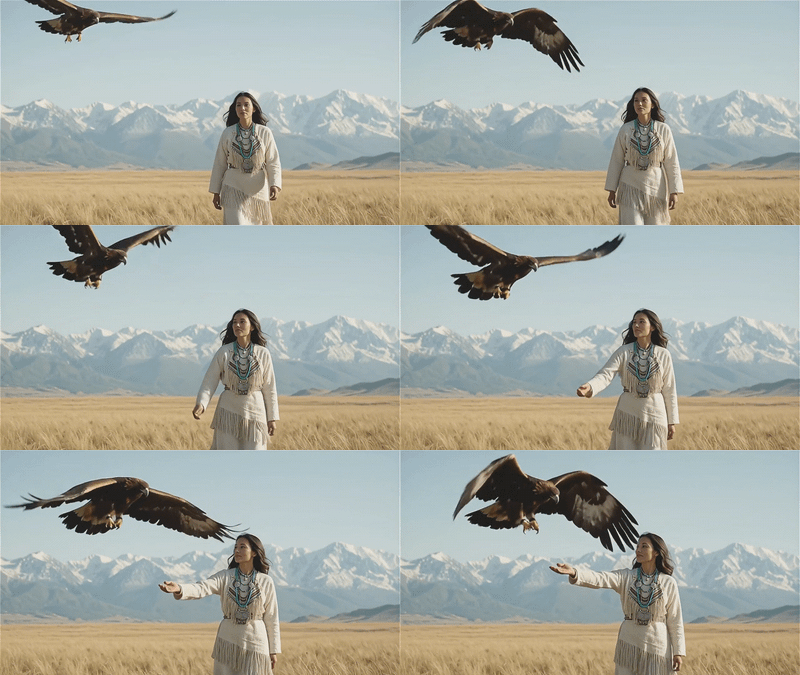
Camera Angle Creation using Image2Vid
Using witness cameras to recreate additional shots that were not captured by principal photography
Camera Control
Image
Image2Vid
LoRAs
Qwen Image Edit 2511
Vid2Vid
Video
Wan2.6
802
Nodes & Models
VLM_floyo
AlibabaWan26ImageToVideo_floyo
VideoToFrames
CLIPLoader
qwen_2.5_vl_7b_fp8_scaled.safetensors
VAELoader
qwen_image_vae.safetensors
UNETLoader
qwen_image_edit_2511_bf16.safetensors
WorkflowGraphics
Fast Groups Muter (rgthree)
LoadImage
LoraLoaderModelOnly
Qwen-Image-Edit-2511-Lightning-8steps-V1.0-fp32.safetensors
qwen-image-edit-2511-multiple-angles-lora.safetensors
PreviewImage
TextEncodeQwenImageEditPlus
ModelSamplingAuraFlow
PreviewAny
CFGNorm
KSampler
VAEDecode
easy positive
easy promptList
VHS_LoadVideo
VHS_VideoCombine
FirstFrameSelector
Text Concatenate
TextEncodeQwenImageEditPlusPro_lrzjason
ImageConcanate
ImageConcanate
Overview

The image‑edit stage uses multi‑angle tools to generate consistent alternate views of a scene or character: you control azimuth (around), elevation (up/down), and distance (shot size) through a visual camera node, and the edit model re‑renders the image from that angle while preserving identity and lighting. The image‑to‑video stage then takes each of these angle‑specific stills as first frames and animates them into short 720p–1080p clips with smooth camera motion and natural depth, keeping the look of each angle intact over time.
Why use this approach
Gives director‑style control over coverage: you can systematically create front, 3/4, profile, back, low‑angle, high‑angle, and different shot sizes from a single design, then animate each into its own shot.
Separates camera planning from motion generation: first lock in the exact static framing with multi‑angle editing, then hand those frames off to the motion model to add parallax and movement without re‑designing the character.
Produces angle‑matched motion clips suitable for editing together like traditional coverage (establishing → medium → close‑up) rather than relying on a single generic animation.
Typical use cases
Building multi‑shot sequences around a character—wide establishing, medium conversation, and close‑up reaction shots—from one original artwork, then animating each for trailers or shorts.
Generating alternate angles for product or environment shots (front, side, 3/4, overhead), then turning them into smooth motion clips for ads or explainers.
Creating consistent reference motion from multiple viewpoints (front and back angles of the same character in motion) for editing into more complex scenes or using as reference for further animation.
Read more