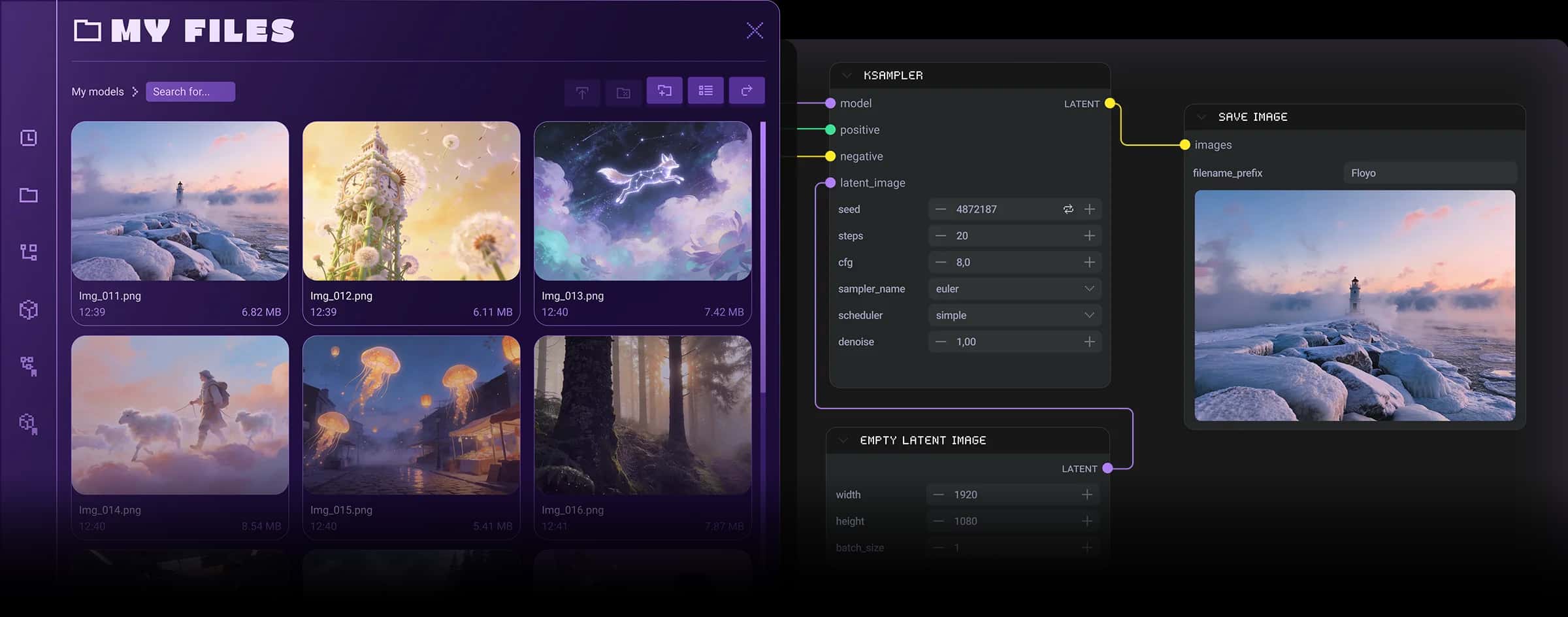
The Prompt PostProcessor (PPP) is an extension for Stable Diffusion WebUI and ComfyUI that enhances prompt processing capabilities, allowing users to manipulate prompts more effectively after other modifications. It enables users to send elements from the positive prompt to the negative prompt, along with managing wildcards and local variables.
- Facilitates the transfer of specific prompt elements to the negative prompt, enhancing control over generated outputs.
- Supports dynamic processing of wildcards and local variable management, allowing for more complex prompt configurations.
- Offers compatibility with various forks of Stable Diffusion, ensuring versatility across different platforms.
Context
The Prompt PostProcessor (PPP) is a specialized tool designed to enhance the functionality of prompt processing within ComfyUI and other compatible interfaces. Its primary purpose is to allow users to refine and manipulate prompts after they have been altered by other extensions, ensuring greater control over the final output.
Key Features & Benefits
PPP provides several practical features that significantly improve prompt handling. One of its standout capabilities is the ability to send portions of the positive prompt to the negative prompt, which is particularly useful when utilizing wildcards. Additionally, it allows users to set and modify local variables and filter content based on the selected Stable Diffusion model, enhancing the adaptability of prompts to different scenarios.
Advanced Functionalities
This extension includes advanced functionalities such as processing wildcards in various formats, including those compatible with Dynamic Prompts. It can detect invalid wildcards and allows users to choose how to handle them, thus streamlining the prompt creation process. Furthermore, it can map extranetworks (LoRAs) based on specific conditions, like the loaded model variant, providing tailored output options.
Practical Benefits
By integrating the Prompt PostProcessor into their workflow, users can significantly enhance their control over prompt generation, resulting in improved output quality and efficiency. The ability to clean and manage prompts effectively reduces the complexity of prompt creation, allowing for a more seamless and productive experience when working with AI-generated art.
Credits/Acknowledgments
The Prompt PostProcessor is developed by contributors to the open-source community, and it is licensed under the MIT license. For more details, users can refer to the original authors and contributors listed in the repository.