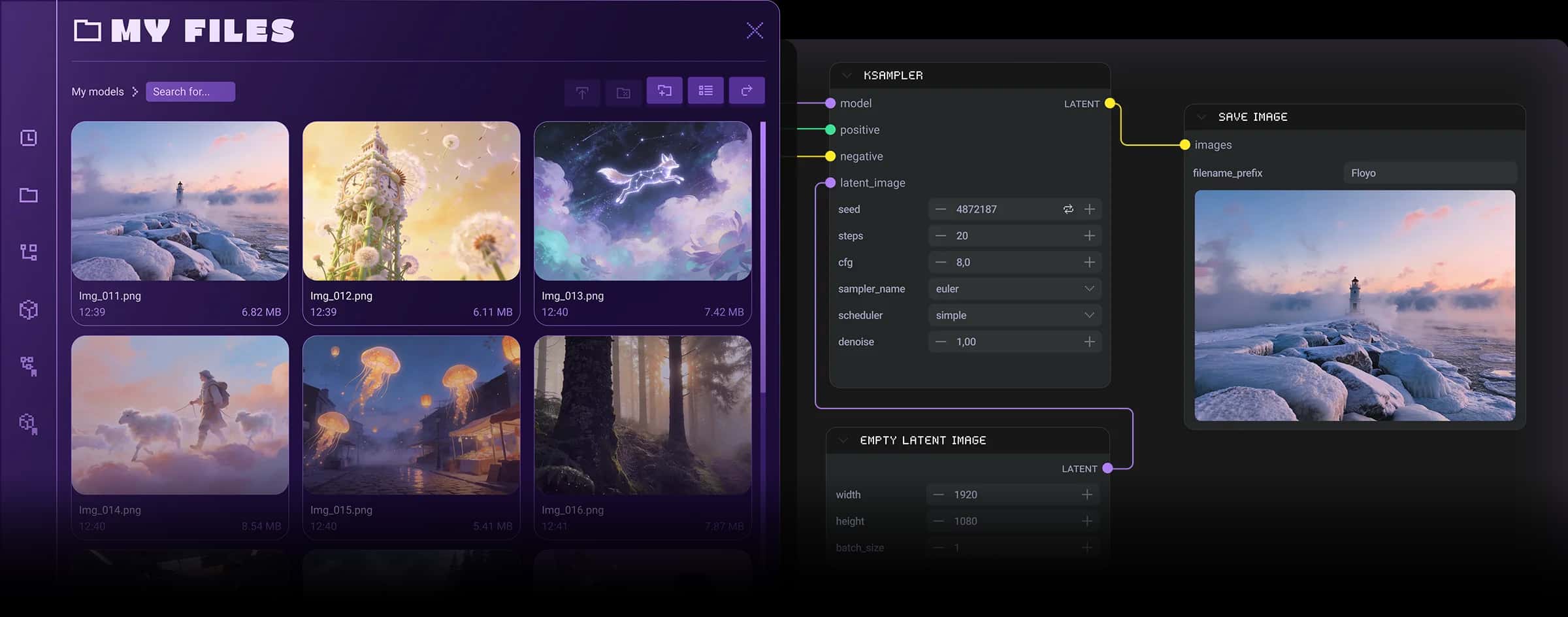
Lora Info for ComfyUI is a specialized tool that enhances the ComfyUI experience by providing detailed information about Lora Base Models, including trigger words and practical examples. It retrieves data from CivitAI, streamlining the workflow for users who utilize Lora models in their AI art generation.
- Offers clear insights into Lora Base Models, making it easier for users to understand and utilize them effectively.
- Integrates seamlessly with ComfyUI, allowing for direct connections to other nodes that accept string or text inputs.
- Supports image loading from URLs, facilitating easier sharing and collaboration on workflows.
Context
Lora Info is an extension designed to enrich the ComfyUI environment by displaying essential information about Lora Base Models. Its primary goal is to assist users in navigating and leveraging Lora models by providing relevant data such as trigger words and example prompts.
Key Features & Benefits
This tool provides a user-friendly interface that showcases Lora Base Model details, which is crucial for artists looking to optimize their AI-generated artwork. The ability to connect its outputs to various nodes enhances the overall functionality of ComfyUI, allowing for more dynamic and responsive workflows.
Advanced Functionalities
Lora Info includes advanced capabilities such as the ability to load images directly from URLs, which simplifies the process of integrating visual assets into projects. This feature is particularly beneficial for users who share workflows, as it minimizes the need for separate image downloads and enhances collaboration.
Practical Benefits
By incorporating Lora Info into their workflow, users gain improved control over the use of Lora models, which can lead to higher quality outputs and increased efficiency. The tool's integration with ComfyUI allows for a more organized and streamlined creative process, ultimately enhancing the user experience.
Credits/Acknowledgments
Special thanks to badjeff for the primary development work on this tool and alessandroperilli for valuable feedback during its creation. The tool is open source, and contributions are welcome from the community.