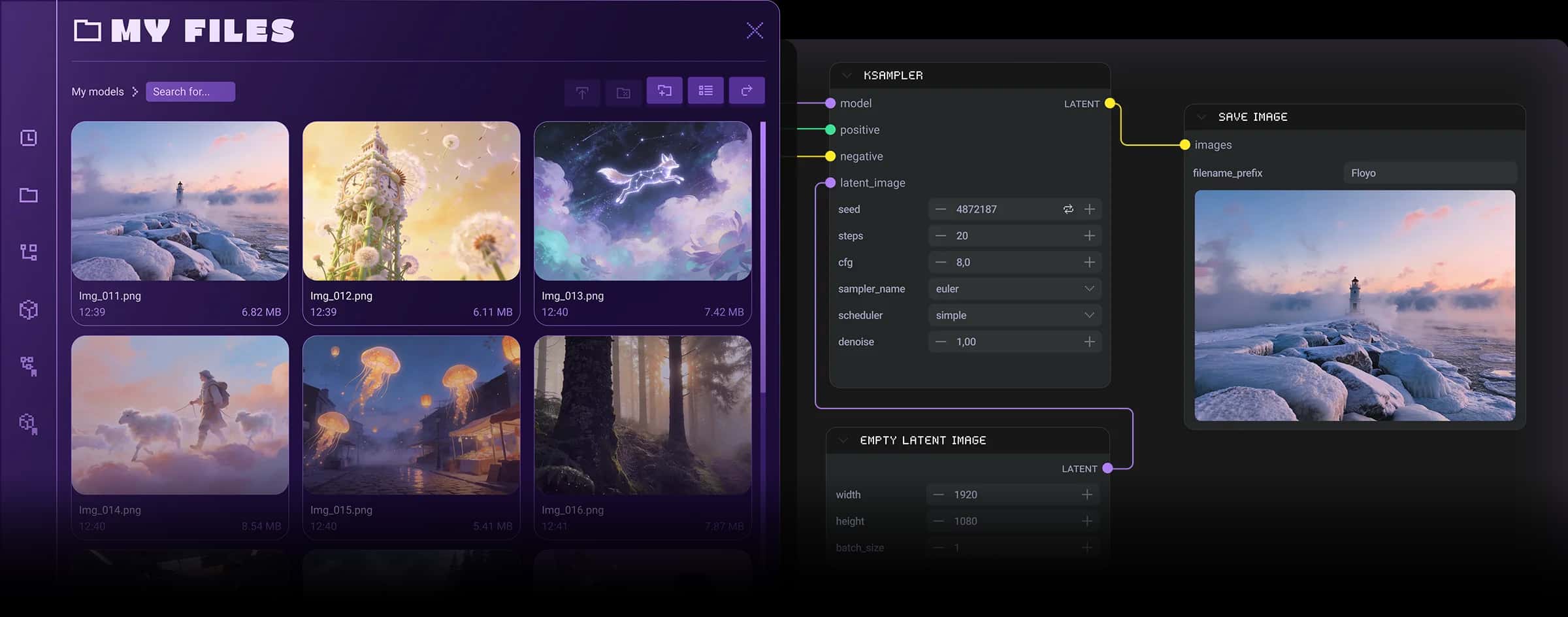
Audio Reactivity Nodes for ComfyUI allows users to create animations that respond to audio inputs, generating visually dynamic content that syncs with music. This tool is designed for seamless integration within ComfyUI, providing a range of workflows that cater to different types of media inputs.
- Enables the creation of audio-reactive animations using images, videos, or text prompts.
- Offers a straightforward setup process through downloadable workflows that simplify the integration of audio and visual elements.
- Compatible with existing ComfyUI nodes, enhancing the versatility of AI-generated content.
Context
This tool is a collection of custom nodes specifically designed for ComfyUI, aimed at introducing audio reactivity into AI-generated animations. Its primary function is to synchronize visual outputs with audio inputs, allowing creators to generate engaging multimedia experiences that respond dynamically to sound.
Key Features & Benefits
The tool supports various workflows, including converting images, videos, or text prompts into audio-reactive animations. This flexibility is crucial for artists and developers looking to explore creative possibilities by aligning visuals with audio cues, thereby enhancing the storytelling aspect of their projects.
Advanced Functionalities
The nodes include advanced capabilities such as audio analysis, which generates reactive weights for each frame based on audio input, and audio peaks detection, which identifies significant audio events to trigger visual transitions. These functionalities allow for precise control over how visuals respond to audio, enabling complex animations that are finely tuned to the rhythm and mood of the sound.
Practical Benefits
Utilizing this tool streamlines the workflow for creating audio-reactive animations within ComfyUI, providing users with enhanced control over the generation process. The ability to easily link audio to visual outputs improves efficiency, allowing creators to focus more on artistic expression rather than technical limitations.
Credits/Acknowledgments
This tool was developed with contributions from various authors, including Lilien. It is open-source and available for collaboration, enabling continuous improvement and innovation within the community.