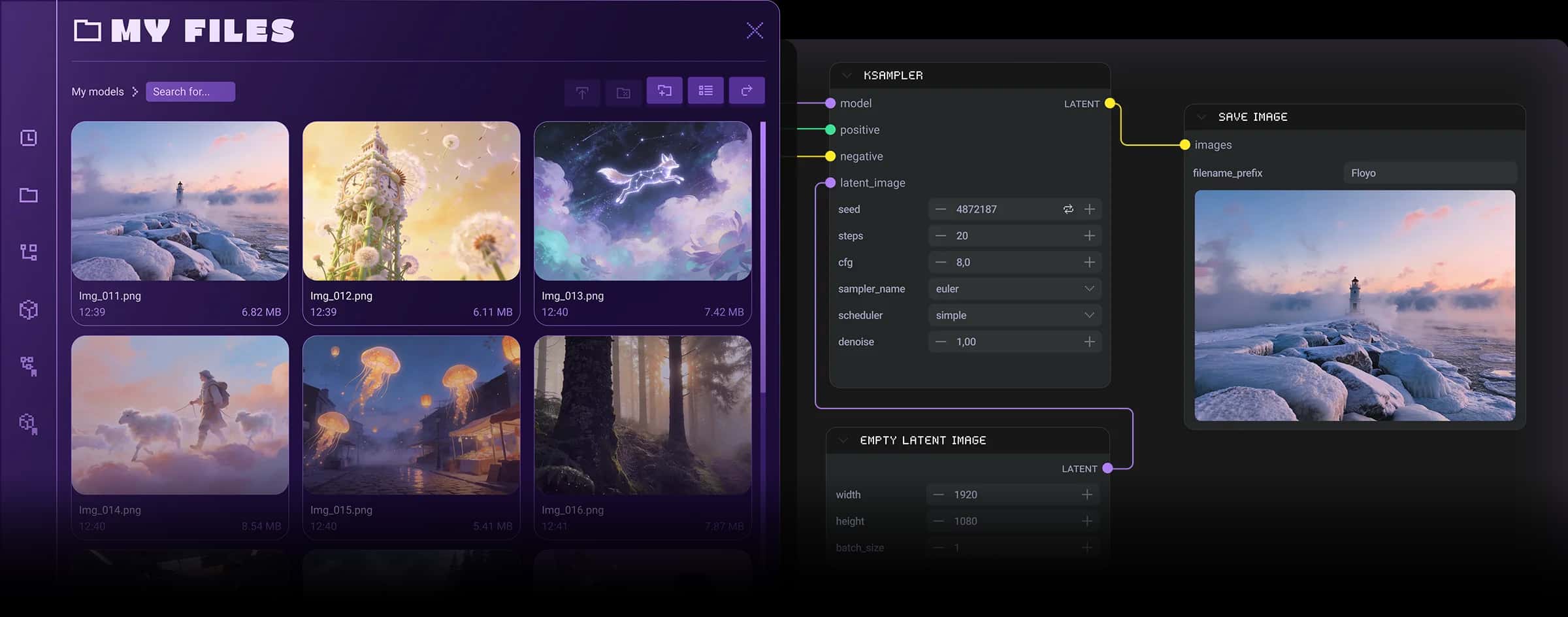
Provides a mechanism to adjust the temperature settings for both UNET and CLIP components within ComfyUI, enhancing the quality of generated images, especially when dealing with non-native resolutions. This tool also includes a feature that helps maintain image quality during both upscaling and downscaling processes.
- Enables precise temperature adjustments for improved image generation quality.
- Compatible with SD 1.x models and SDXL/Turbo, ensuring broader usability.
- Reduces detail loss during image upscaling, leading to sharper results.
Context
This tool is an extension designed for ComfyUI that allows users to modify the temperature settings of UNET and CLIP. The primary purpose is to enhance the quality of generated images by fine-tuning these parameters, which can significantly affect the output, particularly in non-native resolutions.
Key Features & Benefits
One of the standout features is the ability to set different temperature values for UNET and CLIP, which directly influences the creativity and coherence of the generated images. This flexibility allows users to experiment with various settings to achieve desired artistic effects. Additionally, the tool includes a function that helps preserve image quality during scaling operations, which is crucial for maintaining detail in both upscaled and downscaled images.
Advanced Functionalities
The tool offers a specialized function that allows users to toggle compatibility with SD 1.x models and SDXL/Turbo. This feature is particularly useful for users working with different model versions, ensuring that they can still leverage the temperature adjustment capabilities without compromising image quality.
Practical Benefits
By integrating this tool into their workflow, users can significantly enhance their control over image generation in ComfyUI. It improves the overall quality and detail of outputs while minimizing common issues associated with scaling, thereby increasing efficiency and satisfaction with the generated artwork.
Credits/Acknowledgments
This tool was developed by the contributor known as Extraltodeus, who has provided detailed documentation and examples for users. The project is open-source, allowing for community contributions and improvements.