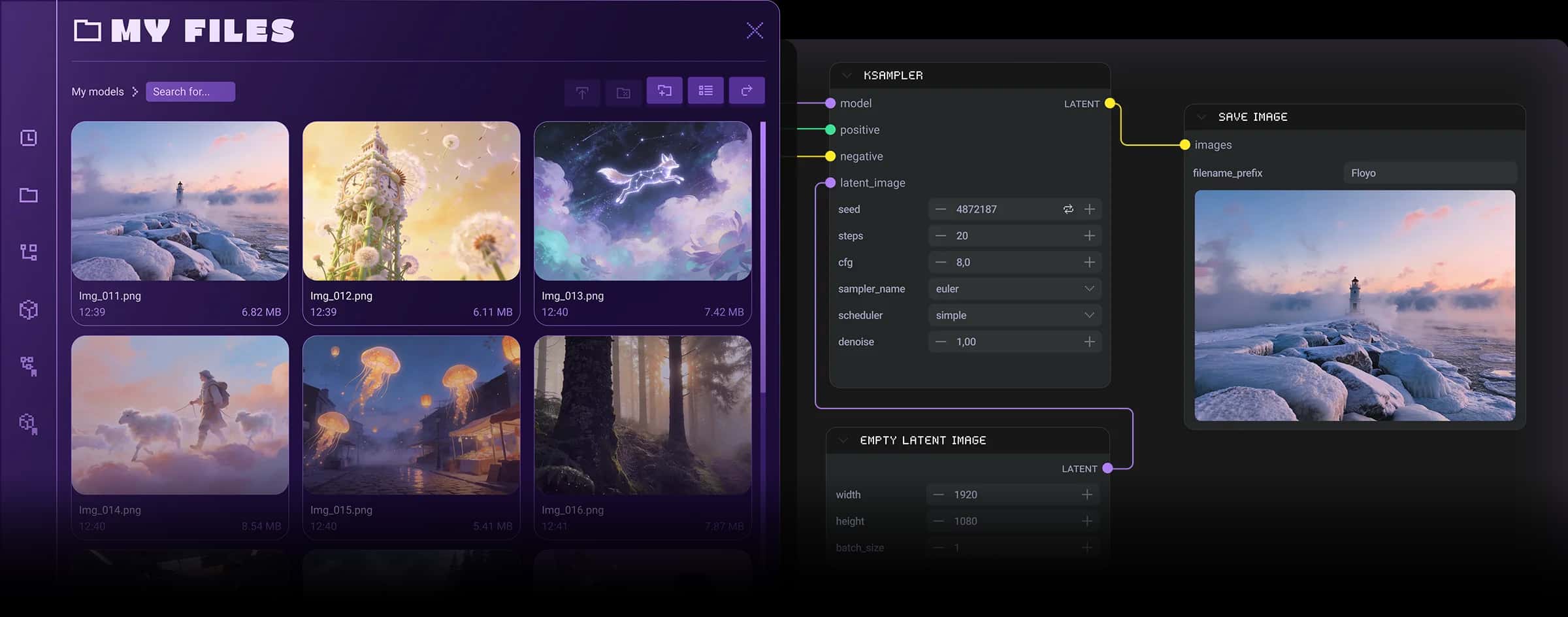
The repository provides a collection of advanced guidance techniques designed for use with ComfyUI and SD WebUI, specifically focusing on enhancing the performance and quality of diffusion models. It includes various implementations such as Perturbed-Attention Guidance (PAG), Smoothed Energy Guidance (SEG), and several others that improve the control and fidelity of image generation.
- Supports multiple guidance methods tailored for different aspects of diffusion model performance.
- Offers unique functionalities that allow users to fine-tune parameters for better image quality and coherence.
- Compatible with both SD1.5 and SDXL, ensuring versatility across different model versions.
Context
This repository serves as an extension for ComfyUI and SD WebUI, integrating various guidance techniques to optimize the performance of diffusion models. The primary goal is to enhance image generation by providing users with advanced tools that improve the coherence and quality of outputs.
Key Features & Benefits
The tool includes several innovative guidance methods such as Perturbed-Attention Guidance and Smoothed Energy Guidance, each aimed at addressing specific challenges in diffusion model training and inference. These methods allow users to manipulate various parameters, leading to improved image fidelity and control over the generation process.
Advanced Functionalities
Among its advanced capabilities, the repository features specialized techniques like Normalized Attention Guidance and Momentum Guidance, which introduce novel approaches to managing attention mechanisms and flow models. These functionalities enable users to achieve high-quality results even at lower guidance scales, enhancing overall model flexibility.
Practical Benefits
By incorporating these guidance methods, users can significantly streamline their workflows, gaining better control over the image generation process. The ability to fine-tune guidance parameters leads to improved image quality and reduces the risk of over-saturation, ultimately enhancing the efficiency of using ComfyUI.
Credits/Acknowledgments
The development of these guidance techniques is attributed to various authors and researchers, as detailed in the citations provided in the repository. Each method is based on peer-reviewed research, ensuring that users benefit from cutting-edge advancements in the field of diffusion models.