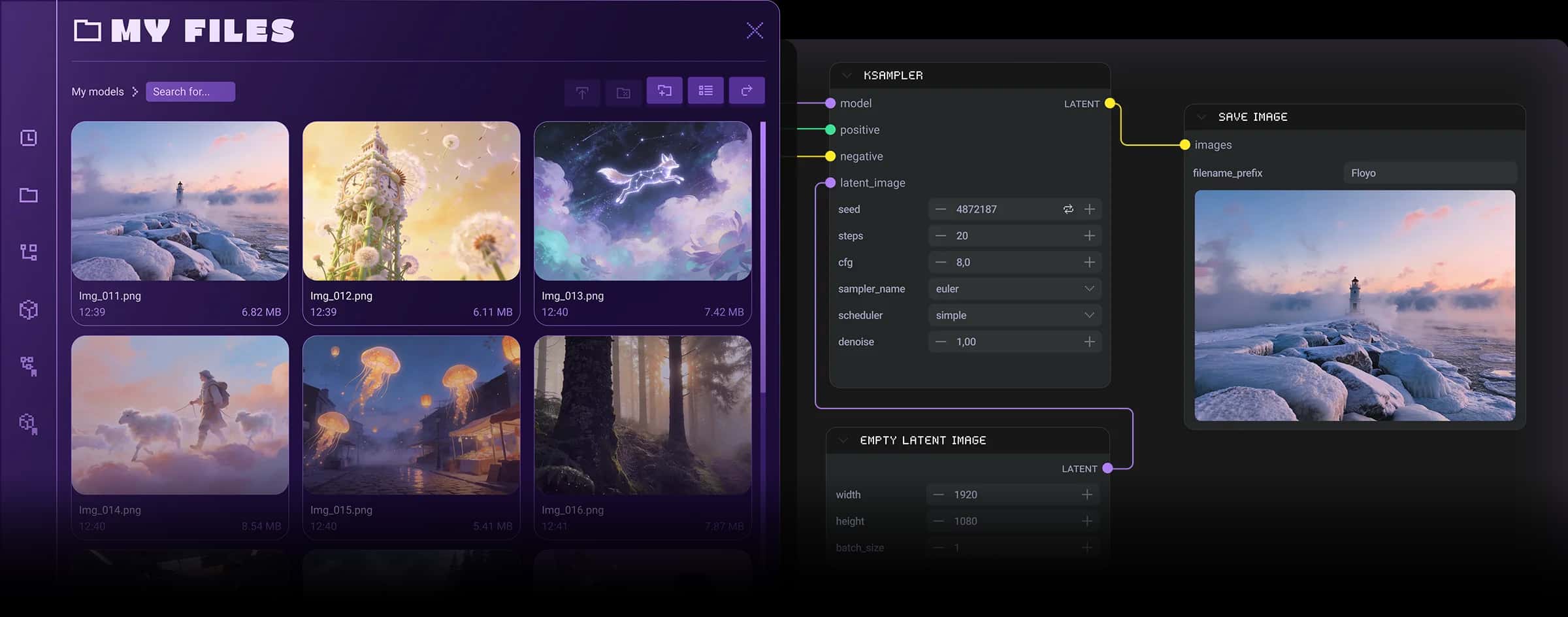
A custom node suite designed to enhance the functionality of Open Creative Studio within ComfyUI, this tool provides various specialized nodes for image and video processing. It includes features for organizing, filtering, saving, and managing media files, streamlining creative workflows.
- Efficiently merges images into customizable grids for better visualization.
- Filters image lists based on size criteria, ensuring only relevant images are retained.
- Allows saving images in multiple formats with customizable metadata options.
Context
This tool is a collection of custom nodes specifically tailored for Open Creative Studio (OCS) within ComfyUI. Its primary purpose is to expand the capabilities of OCS by providing users with additional tools for image and video manipulation, thereby enhancing their creative processes.
Key Features & Benefits
The suite includes various nodes that serve distinct functions, such as the Image Grid node, which organizes images into a structured format, and the Image List Filter, which ensures that only images meeting specified size criteria are processed. The Image Saver node allows for flexible saving options, including embedding relevant metadata directly into image files, which can be crucial for maintaining workflow context.
Advanced Functionalities
Among its advanced features, the Model Downloader node simplifies the process of acquiring AI models from the Hugging Face repository, supporting both absolute and relative paths and optional authentication. Additionally, the Watermarker node provides precise control over watermark placement, size, and opacity, allowing users to protect their work effectively.
Practical Benefits
This tool significantly improves workflow by automating repetitive tasks such as image organization and filtering, thus saving time and reducing manual errors. It enhances control over output quality and metadata management, making it easier for users to track and utilize their creative assets effectively.
Credits/Acknowledgments
The development of this suite includes contributions from various authors, with specific nodes based on existing works by Kijai, receyuki, willmiao, and rgthree. The code is open source, encouraging further enhancements and community contributions.