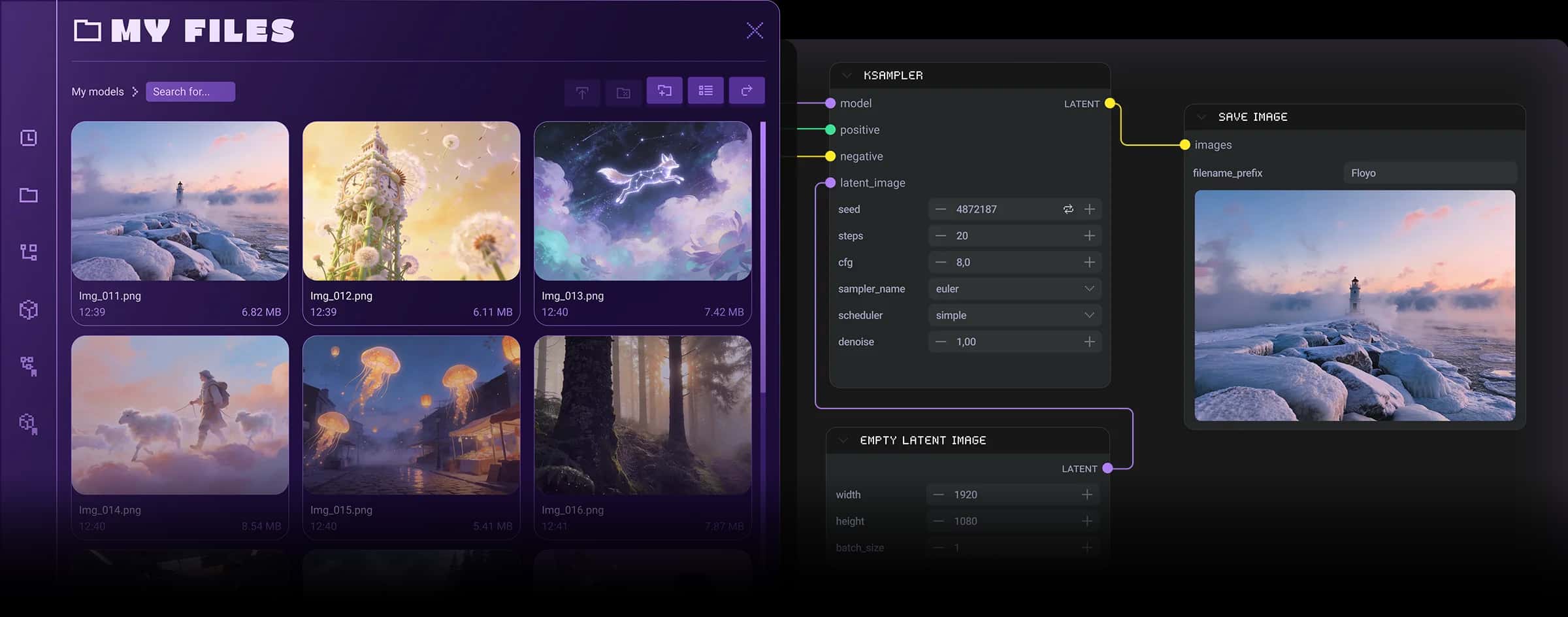
Extracting CLIP and VAE models from a loaded checkpoint in ComfyUI is the primary function of this tool. It enables users to build a TensorRT engine while simultaneously extracting necessary components without needing to reload the original model checkpoint.
- Allows extraction of CLIP and VAE models during TensorRT engine construction.
- Facilitates the use of extracted models independently in workflows.
- Supports compatibility with specific model architectures, enhancing usability.
Context
This tool serves as an extension for ComfyUI, aimed at simplifying the process of extracting CLIP (Contrastive Language-Image Pretraining) and VAE (Variational Autoencoder) models from a pre-existing checkpoint. The main purpose is to streamline the workflow for users who utilize TensorRT engines, allowing them to access these models without the overhead of reloading the entire checkpoint.
Key Features & Benefits
One of the standout features of this tool is its ability to extract models in a single pass while building the TensorRT engine. This means users can efficiently utilize the compiled engine alongside the extracted models, significantly reducing the time and computational resources required. Additionally, the tool ensures that users can load CLIP and VAE models independently, providing flexibility in their workflows.
Advanced Functionalities
The tool includes advanced capabilities for handling different model architectures. For instance, it has specific support for SDXL models, where the CLIP models are saved in a manner compatible with a dual clip loader. This preprocessing step ensures that users can seamlessly integrate these models into their workflows without additional modifications.
Practical Benefits
By integrating this tool into their workflows, users can achieve greater efficiency and control over their AI art generation processes in ComfyUI. The ability to extract and utilize models independently allows for more streamlined operations, ultimately leading to improved quality and faster turnaround times in generating AI art.
Credits/Acknowledgments
The tool was developed by the original author, with contributions from various collaborators. It is hosted on GitHub under an open-source license, encouraging community involvement and further enhancements.