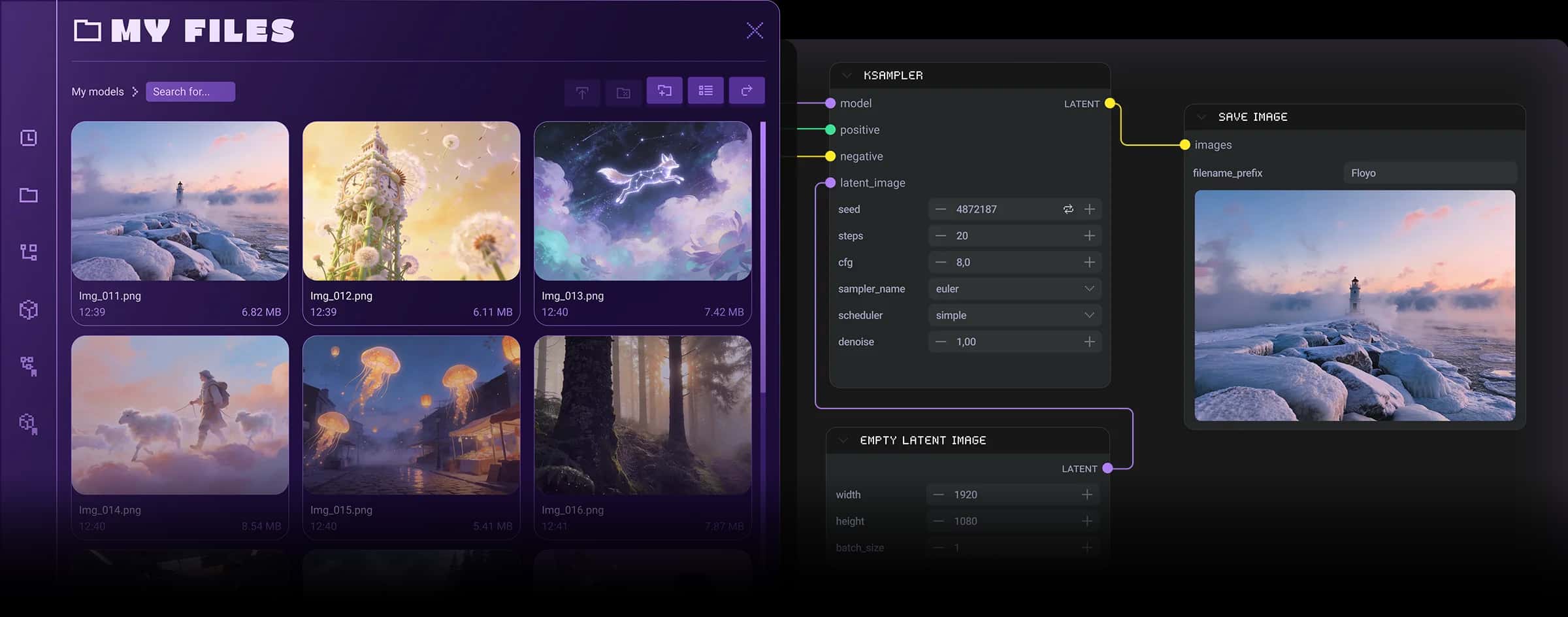
A collection of custom nodes designed for ComfyUI, ComfyUI-AQnodes enhances image processing, AI model integration, and API interactions to streamline workflows. This repository provides specialized nodes that allow users to efficiently manage and manipulate images and text with advanced AI capabilities.
- Offers custom nodes for image processing, enabling batch operations and enhanced manipulation.
- Integrates seamlessly with transformer models like Qwen and external APIs such as Google’s Gemini for advanced functionalities.
- Facilitates the sending of images to external services for processing, improving workflow efficiency.
Context
ComfyUI-AQnodes is a set of custom nodes specifically created to extend the functionality of ComfyUI, a user-friendly interface for managing AI art workflows. Its primary goal is to provide additional tools that simplify complex image processing tasks and enhance interactions with AI models and APIs.
Key Features & Benefits
This tool includes several nodes that cater to distinct needs, such as combining multiple images and masks for batch processing or interfacing with advanced AI models for text generation. These features allow users to perform sophisticated operations without the need for extensive coding, making the workflow more intuitive and efficient.
Advanced Functionalities
The repository includes nodes that interface with the Qwen transformer model, which can generate and analyze text based on visual input. Additionally, it features an integration with Google’s Gemini AI, allowing users to leverage its powerful capabilities through an API for complex tasks that require advanced processing.
Practical Benefits
By utilizing ComfyUI-AQnodes, users can significantly improve their workflow by automating repetitive tasks, enhancing image processing capabilities, and integrating with powerful AI models. This leads to more control over the creative process, higher quality outputs, and overall efficiency in managing AI art projects.
Credits/Acknowledgments
The repository is maintained by its original authors and contributors, with a license available for users to understand the terms of use and contribution guidelines.